Decluttering the Workplace for Productivity: A Practical Dubai Office Reset
A useful office reset removes friction, not personality. Audit shared storage, paper, cables, and unused furniture without disrupting work or hiding the same clutter elsewhere.
Workplace decluttering helps productivity when it shortens routine searches, clears shared surfaces, and keeps circulation routes usable; visual minimalism alone is not the goal.
Start with shared problem areas such as print zones, stationery cupboards, storerooms, and unassigned desks before asking employees to edit personal workstations.
Give every category an owner and a decision deadline so uncertain items do not migrate from one cupboard to another.
Confidential paper, e-waste, batteries, and ordinary recyclables require separate handling rather than one mixed removal pile.
A short monthly reset and a one-in, one-out rule for bulky furniture are easier to sustain than an annual office purge.
Decluttering the workplace for productivity starts with friction
Decluttering the workplace improves productivity when it removes small, repeated obstacles: searching for a working cable, moving old chairs before a meeting, opening three cupboards to find printer paper, or navigating cartons left beside a service-room door. Start with those friction points, not with a demand that every desk look empty.
A productive office can still contain samples, reference books, prototypes, and personal objects. The test is whether people can find, use, and return what they need without interrupting someone else. If a decluttering exercise removes useful tools or creates new approval steps, it has made the workplace tidier and the work slower.
Audit shared zones before personal desks
Shared spaces create the highest cost because nobody feels authorised to decide what leaves. Walk the office at the end of a normal working day and note where objects have no defined home or owner.
Do not create a mystery cupboard
A temporary review zone needs an owner and an expiry date. Without both, it becomes the new home of every item nobody wanted to decide about.
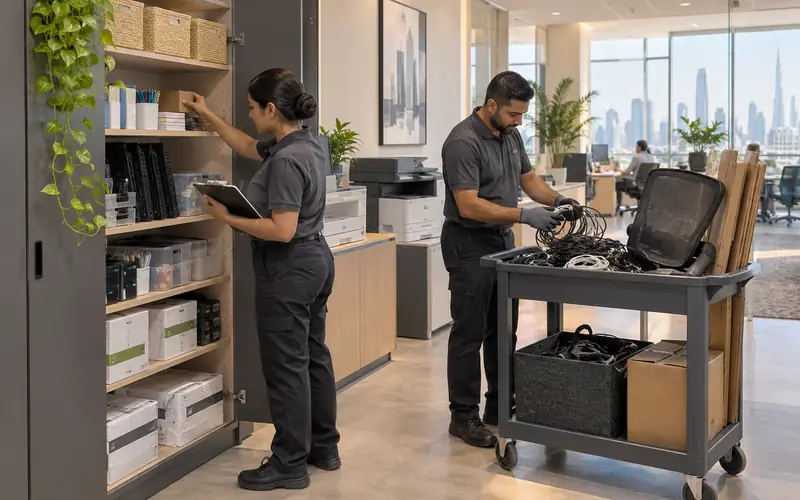
Print zone: expired forms, duplicate paper sizes, spent cartridges, abandoned binding supplies, and confidential pages left in output trays.
Stationery cupboard: unopened duplicates, obsolete branded material, dried markers, and supplies spread across several half-empty cabinets.
IT shelf: unknown chargers, dead keyboards, retired routers, and devices that have not yet been checked against the asset register.
Meeting rooms: surplus chairs, old display adapters, marketing samples, and storage that reduces usable seating.
Storeroom and pantry: event materials, damaged luggage, spare appliances, cartons, and consumables with no named owner.
Use a four-route decision system
Label four physical zones: Keep Here, Move Elsewhere, Return or Donate, and Recycle or Remove. The important category is not the label but the named person who can approve it. Facilities can judge chairs; IT must judge electronics; legal or finance must judge records.
Set a short review window for unclaimed items and tell the team exactly what happens after it closes. Photograph valuable or unusual items and circulate one consolidated list. Repeated desk-by-desk questions create decision fatigue and stretch a two-hour audit across a month.
A category-by-category audit keeps useful supplies accessible and routes obsolete equipment to the right owner.
What should leave, and where should it go?
Do not use a single mixed skip as the finishing step. Segregation preserves reuse value and prevents sensitive material from becoming ordinary waste. Dubai Municipality's commercial recycling guidance recommends distinct, clearly identified storage for general waste and recyclable materials, with safe access for cleaners and waste contractors.
Practical routes for common office clutter
Material
First check
Best route
Usable chairs and desks
Condition, measurements, demand elsewhere
Internal reuse, resale, donation, then material recovery
Paper files
Retention approval and confidentiality
Archive, secure shredding, then paper recycling
Computers and peripherals
Asset register, data, battery condition
IT reuse, supplier return, or authorised e-waste processing
Cables and small electronics
Ownership and working condition
Keep a tested minimum; recycle the obsolete remainder
Cardboard and clean packaging
Remove foam, food residue, and mixed inserts
Flatten and place in the building's paper stream
General broken items
Check for batteries, liquids, or sharp parts
Separate special materials, then arrange approved collection
Run the reset without disrupting the workday
Choose one shared zone at a time and keep half of it operational. A finance team still needs its printer; a sales team still needs a meeting room. Move approved items directly to their final route instead of filling corridors with piles for later. Dubai Civil Defence guidance says corridors and stairways should remain clear of storage and waste materials, which is also the simplest operational rule for a safe office reset.
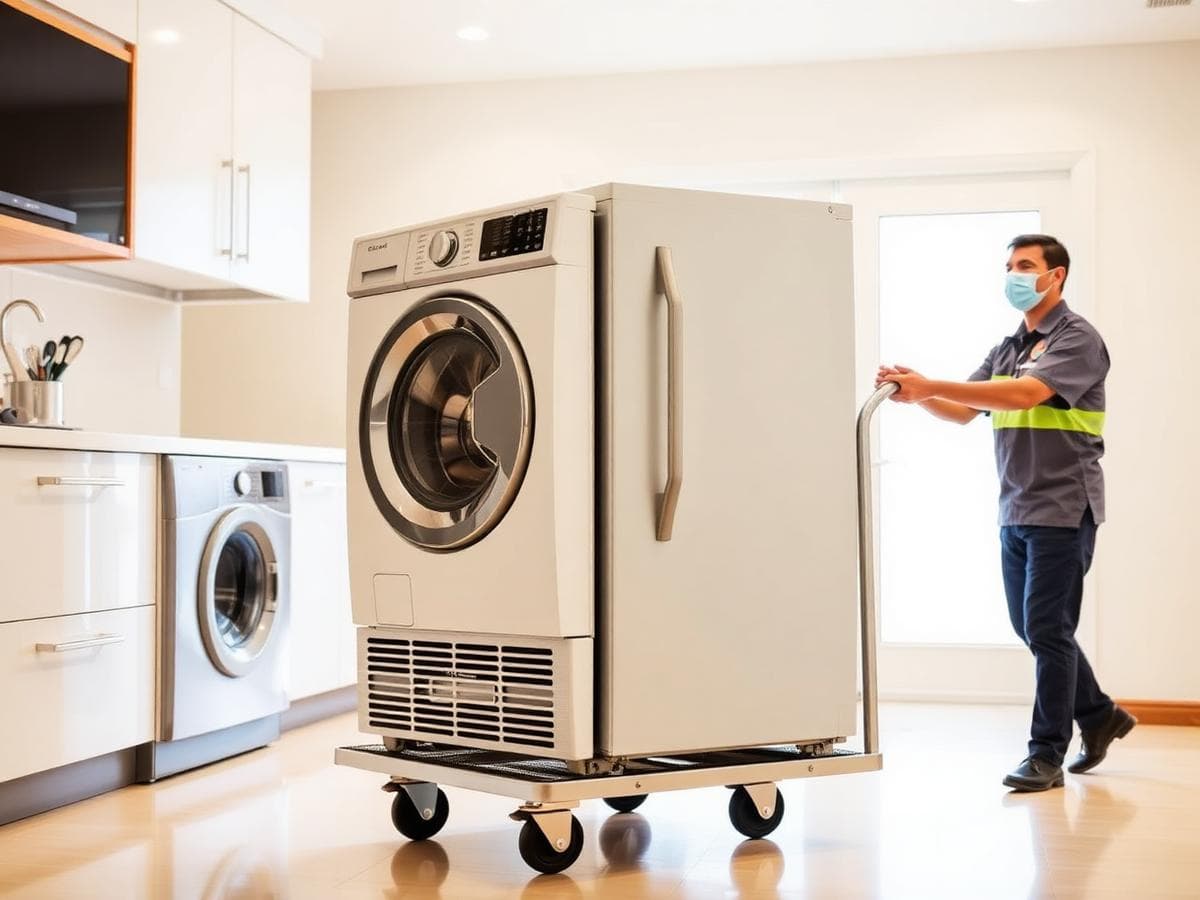
For heavier furniture, dismantling, or more than a trolley of material, schedule the physical removal after hours and use the service route agreed with building security. The staff session should be for decisions, not lifting wardrobes or carrying chairs through a reception area.
Keep the office clear with small operating rules
Assign a maximum quantity and a named home to high-churn categories: spare chairs, event displays, printer stock, cables, and archive boxes. When the allocated space is full, something must leave before more arrives. That makes storage capacity visible and prevents overflow from becoming normal.
Run a 20-minute shared-zone check each month and a deeper quarterly asset review. Include removal in procurement: when new furniture or equipment is delivered, decide at purchase time what the replacement unit will do. This is less dramatic than an annual purge and far more effective.
Finish the reset in one controlled collection
Once every item has an approved route, Dubai Junk Collection can remove surplus furniture, broken storage, cartons, and separated general office clutter in one scheduled visit. Data-bearing devices and confidential records remain under your IT or compliance process.
Send photos of the sorted volume and your building's collection window on WhatsApp. We will quote the physical clearance, coordinate the agreed service route, and leave the shared areas ready for work the next morning.
Frequently Asked Questions
How often should a workplace be decluttered?
Check shared storage monthly and review furniture, records, and equipment quarterly. A larger clearance makes sense before a lease renewal, office redesign, or headcount change. Frequent short resets prevent the familiar cycle in which clutter grows for a year and then becomes an urgent weekend project.
Should employees clear their own desks?
Yes, within a simple policy, but personal desks should not be the first target. Fix shared systems before asking individuals to compensate for them. Give staff a retention rule for paper, a home for supplies, and a confidential-disposal route, then allow reasonable space for the tools and personal objects they use.
How do we handle confidential paper during an office clear-out?
Keep it separate from ordinary recycling in locked consoles or sealed containers, obtain approval under your current retention policy, and use a documented shredding process. Do not leave confidential files in an open corridor pile or ask a general clearance crew to decide what records may be destroyed.
Can we recycle old office chairs and desks in Dubai?
Often, but the route depends on construction and condition. Usable items may be resold, donated, or reused internally. Broken furniture is usually separated into metal, wood, laminate, fabric, and plastic where practical. Share clear photos so the collector can plan space and material handling before arrival.
Planning a clearance in Dubai?
Send photos of what you need cleared on WhatsApp. Our team provides an instant, fixed upfront rate and handles elevator bookings and gate security smoothly.
Specialists in residential and commercial clearances across Dubai since 2016. Committed to safe property handovers, compliant electronic waste disposal, and municipal green waste diversion.
 Ask a Question