How to Dispose of a Chaise Longue in Dubai: Frames, Legs and Lift Access
Check whether the chaise is one piece or modular, measure its longest diagonal, remove only useful detachable parts, protect the upholstery and choose reuse or a booked bulky-furniture collection.
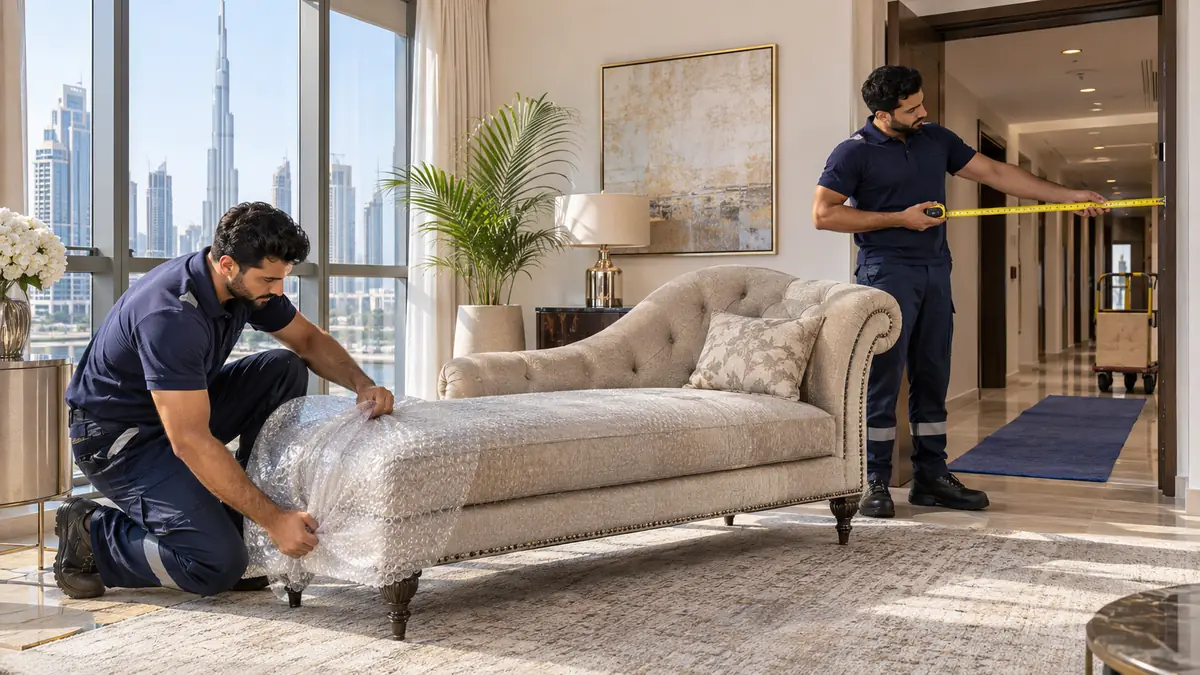
Measure the chaise's full length, back height and carrying diagonal against every doorway, corridor turn and service-lift opening before moving it.
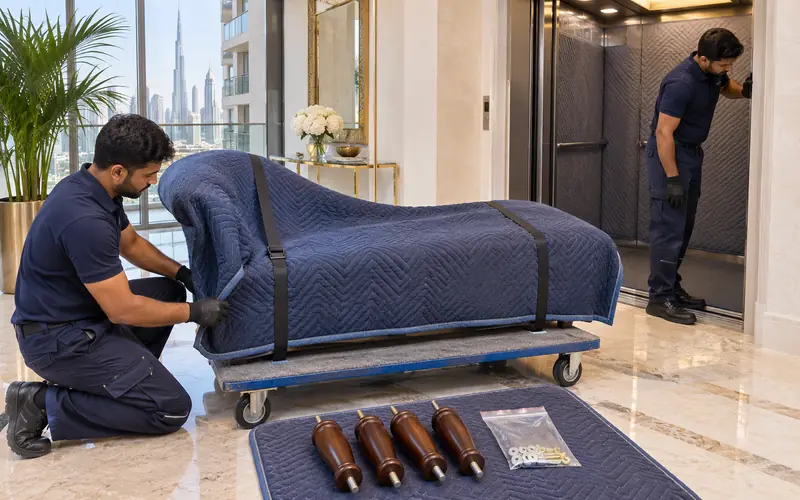
Remove screw-in legs or a documented modular connector only when that meaningfully improves access; keep every fixing in a labelled bag.
A clean, structurally sound chaise may be reused, while broken or contaminated upholstery needs an agreed bulky-furniture route rather than a chute or bin room.
How do you dispose of a chaise longue in Dubai?
To dispose of a chaise longue in Dubai, inspect its frame and upholstery, measure the complete route to the service lift, and remove only detachable legs or modular sections. Offer a clean, sound piece for reuse; otherwise protect it, book building access and arrange an approved bulky-furniture collection.
A chaise is awkward because its long seat and raised back create an uneven centre of gravity. Some are a single hardwood frame; others are the end module from a sectional sofa. Establishing which type you have prevents a forced split that ruins a reusable piece or exposes staples and broken timber during the carry.
Decide whether the chaise is reusable
Remove cushions and check the seat deck, corner joints, springs and underside cloth. A stable frame with clean fabric, complete cushions and only light cosmetic wear is a realistic resale or donation candidate. Photograph every side in daylight and disclose stains, fading, pet damage, odour or a repaired leg rather than leaving the recipient to discover it.
Retire the chaise when the frame shifts under gentle pressure, springs protrude, mould or pest evidence is present, or upholstery contamination cannot be professionally cleaned. Do not place a questionable piece in a communal donation area. Bag loose cushions separately and tell the collector about hygiene or sharp-frame risks before arrival.
Do not cut through the upholstery to make it fit
A concealed spring, metal connector or staple strip can injure the person cutting and anyone carrying the exposed frame. Confirm the construction first; if controlled dismantling is necessary, it belongs in the collection plan.
Measure the entire route, not only the lift
Record overall length, width and the height from floor to the tallest back. Then measure the apartment door, corridor corners, fire doors, service-lift opening and lift-car diagonal. A chaise that fits inside the car may still fail at a tight ninety-degree turn outside it. Protect wall corners and keep common corridors clear while waiting for the booked slot.
Ask building management about move permits, protective lift padding and loading-bay times. Downtown and Marina towers commonly separate passenger and contractor access, while a villa may have an easier ground-floor route but a narrow gate or landscaped path. In summer, stage the vehicle before bringing upholstery into heat and dust.
Remove useful parts and protect the frame
Screw-in feet can often be removed by hand once the chaise is safely tipped onto a clean blanket. Photograph each position, label the feet and fittings, and return any washers to the same order. For a modular chaise, release only visible manufacturer connectors while both sections are supported; never wrench apart a joint that may be structural.
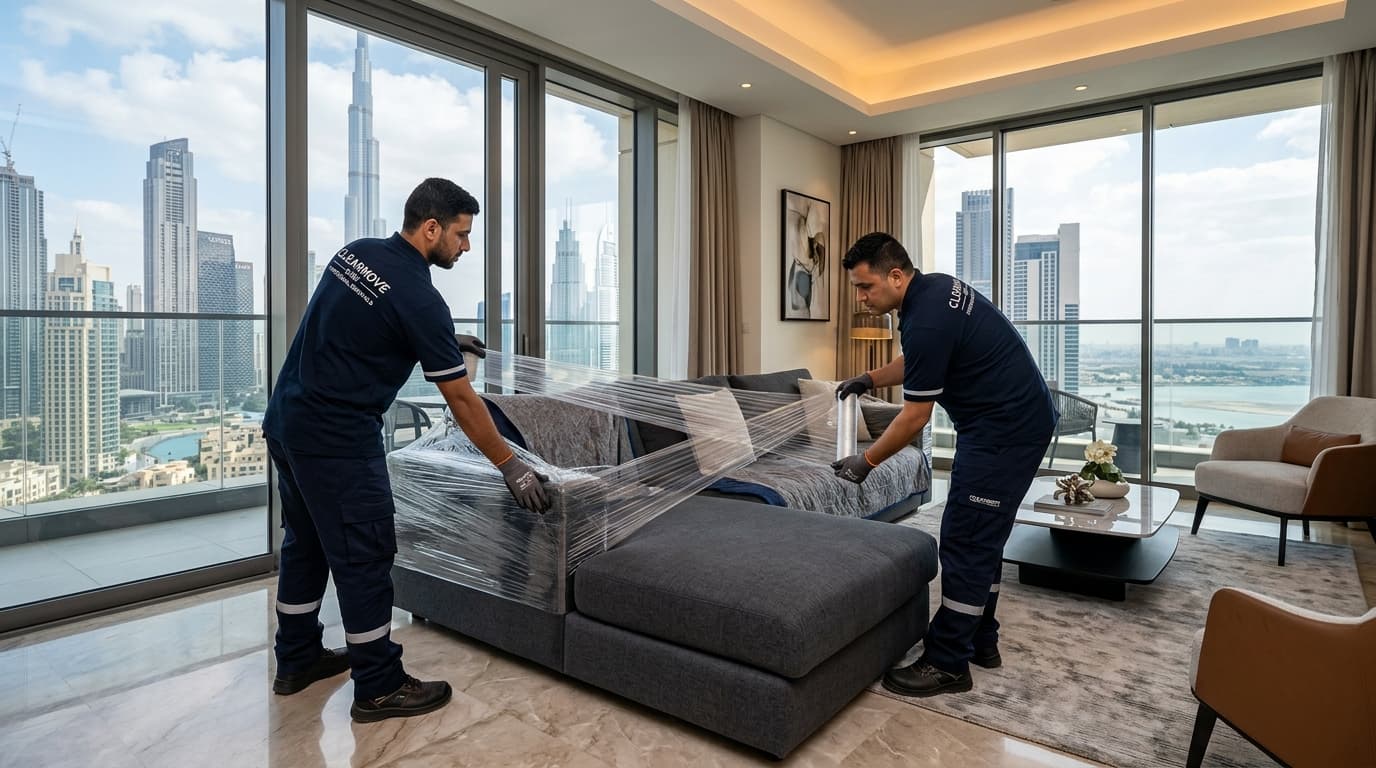
Wrap the upholstery in a breathable moving blanket, cover projecting corners and secure the wrap without placing tape on fabric or leather. Carry the chaise on its strongest frame rails, not by an arm, back scroll or loose cushion. Keep it upright on a padded trolley when the route allows, with one person controlling each end.
Removing the legs only when it improves clearance preserves the frame and keeps every model-specific fixing with the chaise.
Choose reuse or a planned furniture collection
Give reuse a firm deadline so the item does not remain in a lobby or block a handover. Supply accurate dimensions and require the recipient to confirm transport. If nobody can use it, Dubai Municipality currently lists a household bulky-waste service subject to its location and eligibility conditions; private collection should follow an appropriate regulated route.
Can a chaise longue go in an apartment rubbish room?
No. It can block doors, fire routes and waste equipment, and leaving it there may breach building rules. Keep it inside the apartment until management confirms a bulky-item route or your collector arrives for the booked service-lift window.
Should I remove the back from a chaise longue?
Only when the maker designed it as a detachable module and the connectors are visible. Many backs are structural parts of the frame. Forcing one off can expose sharp staples, weaken the chaise and make a safe carry harder.
Can a stained chaise be donated?
Usually not without successful professional cleaning and honest disclosure. Charities and recipients set their own condition rules. Persistent odour, mould, pest evidence or bodily-fluid contamination makes reuse inappropriate and must be disclosed to the collector.
What information helps quote chaise collection?
Send photos, dimensions, the floor, doorway and service-lift details, parking or loading access, and whether the legs or modules detach. Mention frame damage, contamination and any deadline linked to an Ejari handover.
Planning a clearance in Dubai?
Send photos of what you need cleared on WhatsApp. Our team provides an instant, fixed upfront rate and handles elevator bookings and gate security smoothly.
Specialists in residential and commercial clearances across Dubai since 2016. Committed to safe property handovers, compliant electronic waste disposal, and municipal green waste diversion.
 Ask a Question