How to Dispose of a Cooker Hood in Dubai: Wiring, Ducts and Grease Filters
A cooker hood is fixed electrical equipment, not loose scrap. Isolate the circuit, protect the hob and cabinets, release the duct correctly and contain greasy filters.
Have fixed wiring isolated and proved safe before any mounting screws or duct connections are released.
Remove and bag greasy filters separately so residue does not spread across cabinets, lifts or vehicles.
Confirm whether the replacement will reuse the duct, wall opening and cabinet fixings before removing them.
How do you dispose of a cooker hood in Dubai?
To dispose of a cooker hood in Dubai, isolate and verify the circuit, let the appliance cool, remove greasy filters, and have a qualified technician disconnect fixed wiring and ductwork. Protect cabinets and the hob, retain reusable fixings, then route the motor, controls, lamps and metal housing through an appropriate electrical-waste collection.
Unlike a countertop appliance, the hood is part of the kitchen installation. It may be hard-wired, screwed through a cabinet, sealed to a wall and joined to a concealed duct. The removal plan must preserve whatever the landlord or replacement appliance still needs.
Confirm approval, power and the extraction arrangement
If you rent, check whether the hood appears on the inventory and obtain approval before replacing it. Photograph the cabinet, splashback, duct cover and external vent. Note whether the unit extracts outdoors or recirculates through carbon filters, because blanking a live duct or leaving an open wall penetration creates a separate repair.
Switching the control panel off is not electrical isolation. A qualified technician should identify the circuit, isolate it, prove it safe and disconnect any fixed cable. If the hood shares fitted joinery or a fire-rated shaft, ask building management whether its facilities contractor must handle part of the work.
Do not pull a hood away on its cable
The housing may conceal fixed wiring and sharp sheet-metal edges. Support the appliance at its rated mounting points while a qualified technician releases the electrical connection.
Contain grease before releasing the housing
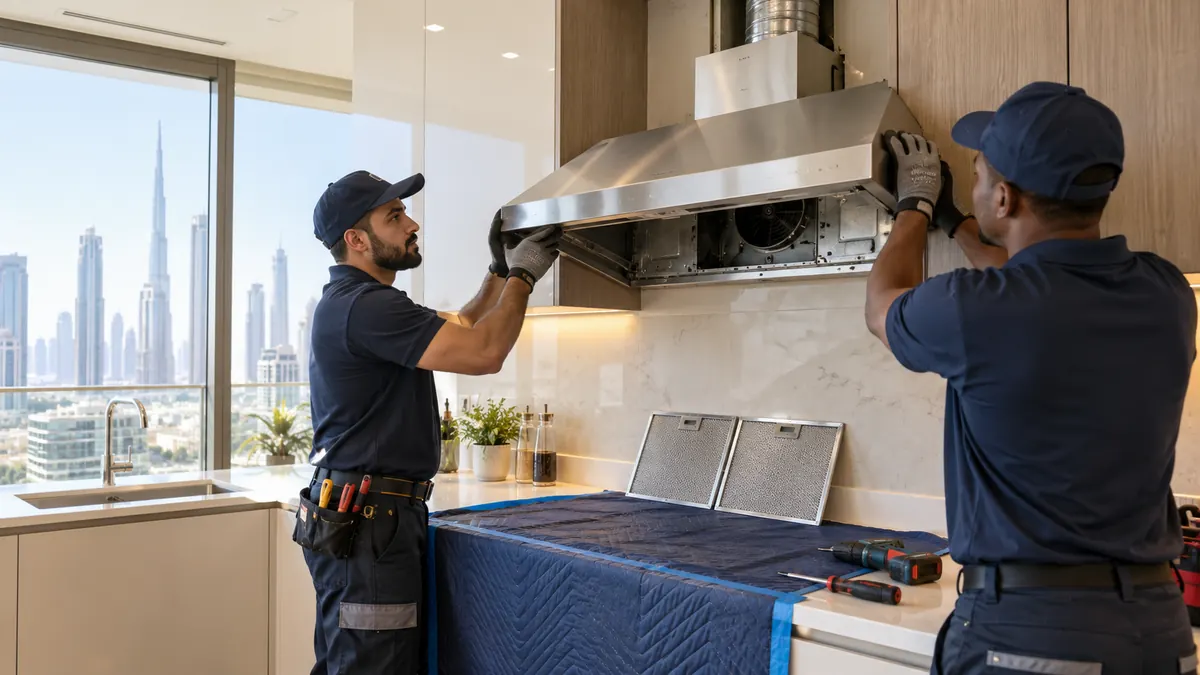
Allow the hob and hood to cool, clear the counter and cover the cooking surface with a rigid board and padded blanket. Release washable mesh filters or sealed carbon cartridges according to the manual. Put greasy filters in a leak-resistant bag or tray rather than washing old oil into a building corridor or transport blanket.
Photograph the fastener positions, remove decorative duct covers and release the duct clamp without crushing a section needed by the replacement. With two people supporting a wide canopy hood, undo mounting screws in the specified order and lower the housing level. Cap or protect the safe disconnected cable as the technician requires.
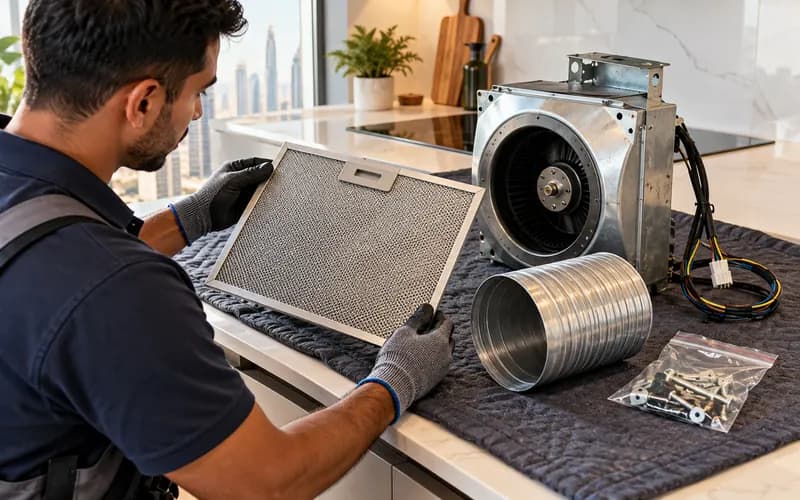
Separating greasy filters from the clean metal housing keeps the removal route tidy and makes recovery easier.
Reuse parts, repair surfaces and route electrical materials
A working hood with its brackets, duct adapter, controls and model details may be reusable. If it has failed, keep the motor, control board, lamps and wiring with the appliance rather than stripping them into a general bin. The stainless or painted housing can then be separated by the receiving recycler under its own rules.
Before handover, agree who will reinstate cabinet holes, wall plugs, duct seals and the electrical point. Our appliance removal service can collect the released unit; the old oven disposal guide covers the appliance below it, while the kitchen-cabinet guide explains wider fitted-kitchen work.
Only if it is plug-connected, the manufacturer permits user removal and you can support it safely. Fixed wiring, shared ducts, fitted cabinetry or inaccessible isolators require the appropriate qualified technician and any building approval.
Do cooker-hood filters go in household recycling?
Not automatically. Grease-soaked mesh, carbon cartridges and mixed filter media can contaminate ordinary packaging bins. Check the manufacturer and local receiving route, and keep used filters bagged separately from the metal housing.
Should the duct be removed with the hood?
Not until you know the replacement and handover plan. A fixed duct, wall sleeve or external grille may belong to the property and remain useful. Remove only the appliance-side section approved for the job.
What should I tell the collector before pickup?
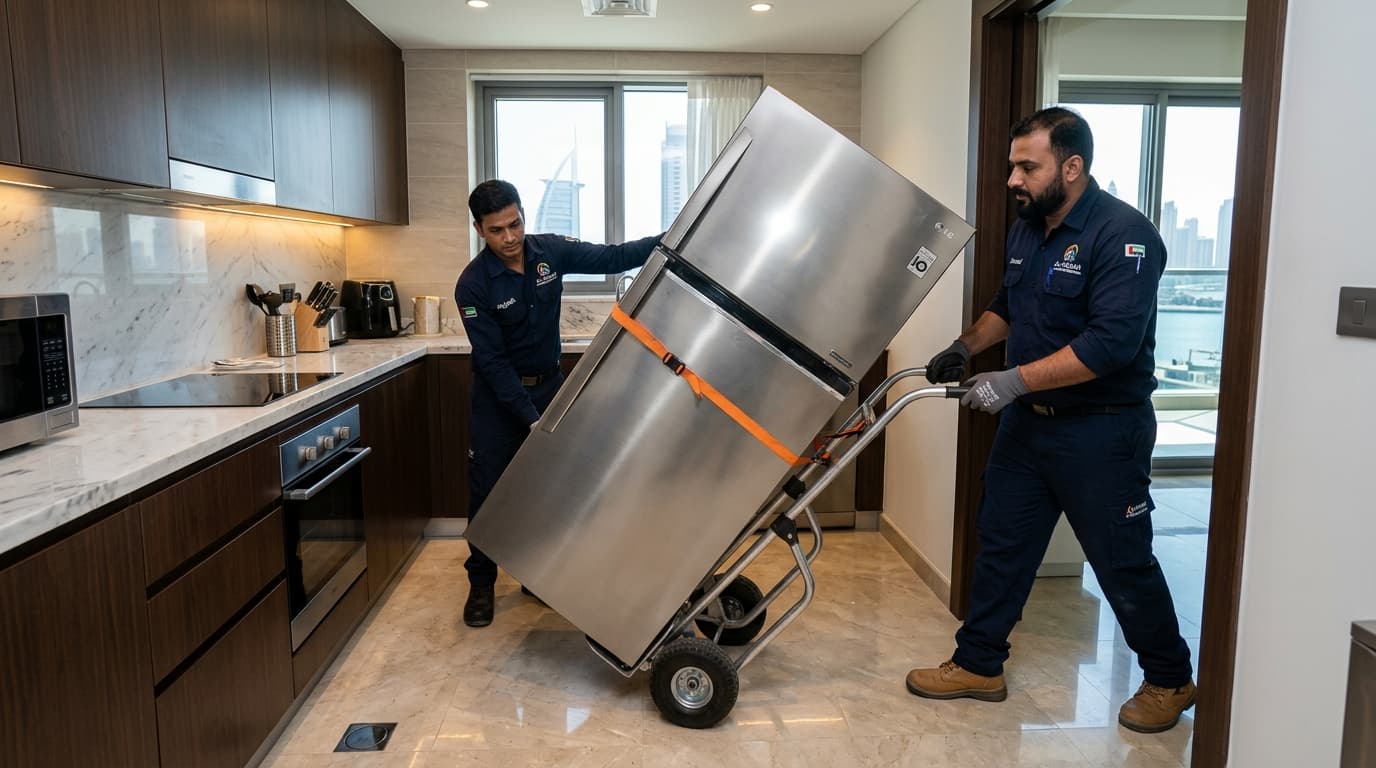
Send the hood type, width, floor, access details and a clear photo after safe disconnection. Mention glass panels, long duct covers, loose filters and any sharp or greasy surfaces so the crew brings suitable wrapping.
Planning a clearance in Dubai?
Send photos of what you need cleared on WhatsApp. Our team provides an instant, fixed upfront rate and handles elevator bookings and gate security smoothly.
Specialists in residential and commercial clearances across Dubai since 2016. Committed to safe property handovers, compliant electronic waste disposal, and municipal green waste diversion.
 Ask a Question