How to Dispose of a Drinks Trolley in Dubai: Glass Shelves, Castors and Safe Moving
Empty bottles and glassware, identify removable glass or mirrored shelves, secure the castors and frame, then preserve a complete usable bar cart or arrange a protected furniture collection through the service lift.
Remove every bottle, glass and loose accessory before testing the trolley; liquids and breakables travel separately and never remain on the shelves during a move.
Lift-out glass or mirrored shelves need rigid face protection and upright packing, while model-specific clips and rails stay labelled with the frame.
Lock or chock the castors, measure the complete route and move the empty frame on a blanket or trolley rather than using a delicate drinks cart to carry other clearance items.
How do you dispose of a drinks trolley in Dubai?
To dispose of a drinks trolley in Dubai, empty it completely, check whether glass or mirrored shelves lift out, and secure its wheels and loose rails. Offer a clean, stable cart with all fittings for reuse; otherwise protect fragile panels, book the service route and arrange an approved furniture collection.
A drinks trolley looks designed for moving, but its small decorative castors, tall frame and loose shelves are meant for gentle use on a level floor. They are not removal equipment. Rolling a loaded cart across a threshold can twist the frame, release a glass shelf or send the trolley down a sloped loading bay.
Empty and inventory everything before moving the frame
Remove bottles, decanters, glasses, trays and bar tools one shelf at a time. Keep sealed drinks for the owner to transport separately and dispose of unwanted liquids through an appropriate household route; never pour unknown contents into a drain or leave them for a clearance crew to identify. Wrap glassware in boxes that are independent of the trolley.
Photograph the complete cart, then count shelf clips, removable trays, bottle rails, handles and keys for any locking cabinet. A clean, stable trolley with its original parts can be useful in another home. Disclose tarnish, loose joints, chipped veneer, scratched mirrors and wheels that bind instead of presenting a decorative piece as ready to roll.
Never use the trolley as a removal cart
Decorative castors and glass shelves are not rated for boxes, appliances or clearance bags. Move the trolley empty and use a proper flat trolley for the load.
Remove fragile shelves only when the design allows it
Wear gloves and inspect the underside before lifting. Some glass panels sit on rubber pads or small metal clips and lift straight out; others are bonded into a metal rim or fixed beneath a retaining rail. Do not lever a bonded panel with a screwdriver. If the construction is unclear, pad the glass in place and let the collection team assess it.
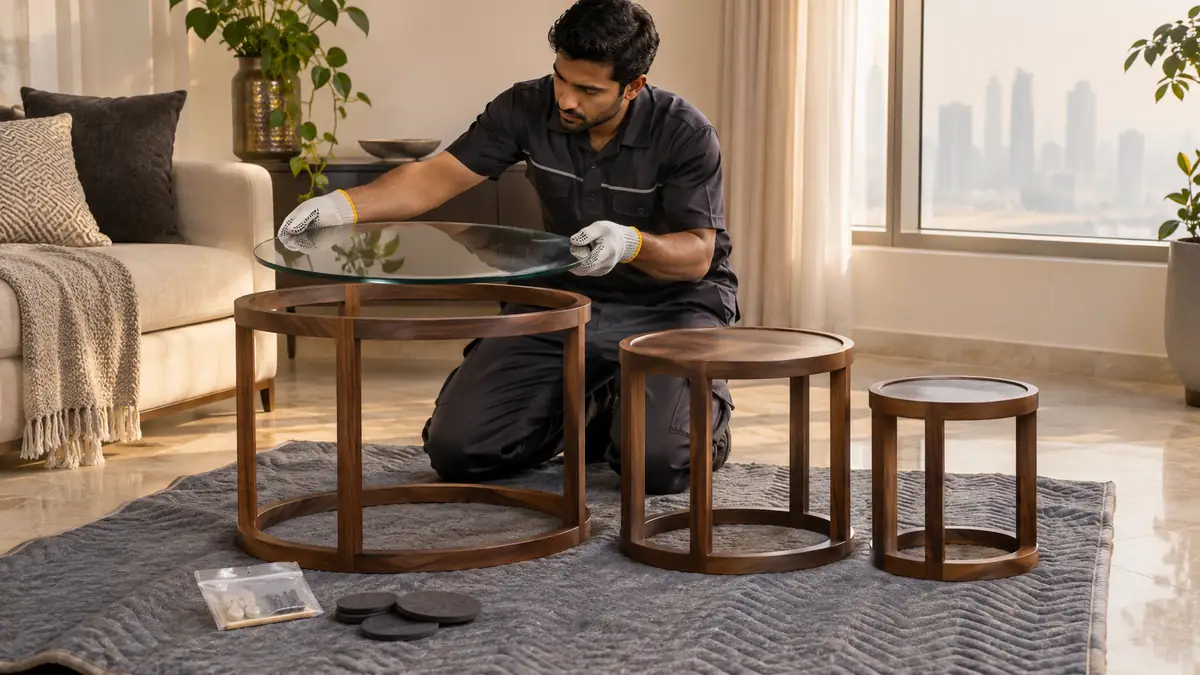
Wrap removable glass or mirror panels individually with clean paper, bubble protection and rigid cardboard on both faces. Keep them upright in a marked slot away from metal frames, and bag their clips against the trolley's asset or photo. Tempered glass still chips at exposed edges and can fail suddenly after an impact.
Removable glass shelves travel upright with rigid face protection while clips stay labelled to the empty, secured frame.
Secure the castors and measure the service route
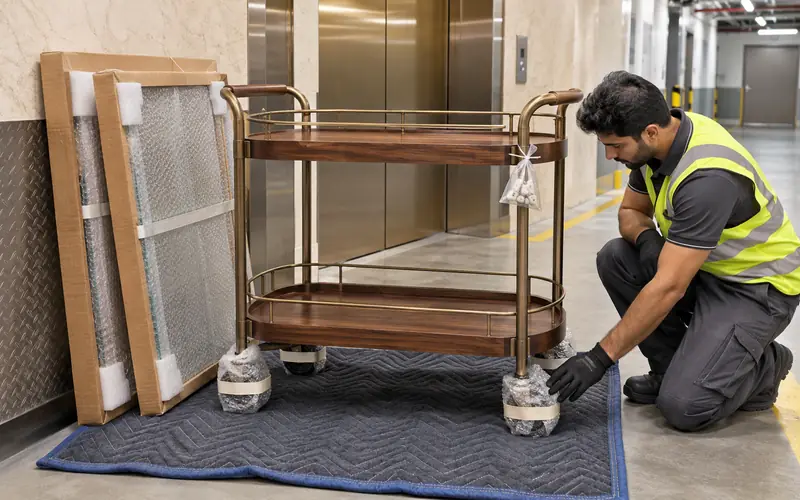
Test each wheel on the cleared floor. Apply fitted brakes, or chock unbraked castors before wrapping. Never tape directly over plated metal or timber because adhesive can lift lacquer and leave residue. Protect handles and corner rails, then move the frame on a blanket-covered furniture dolly or carry it by strong lower rails rather than a decorative top handle.
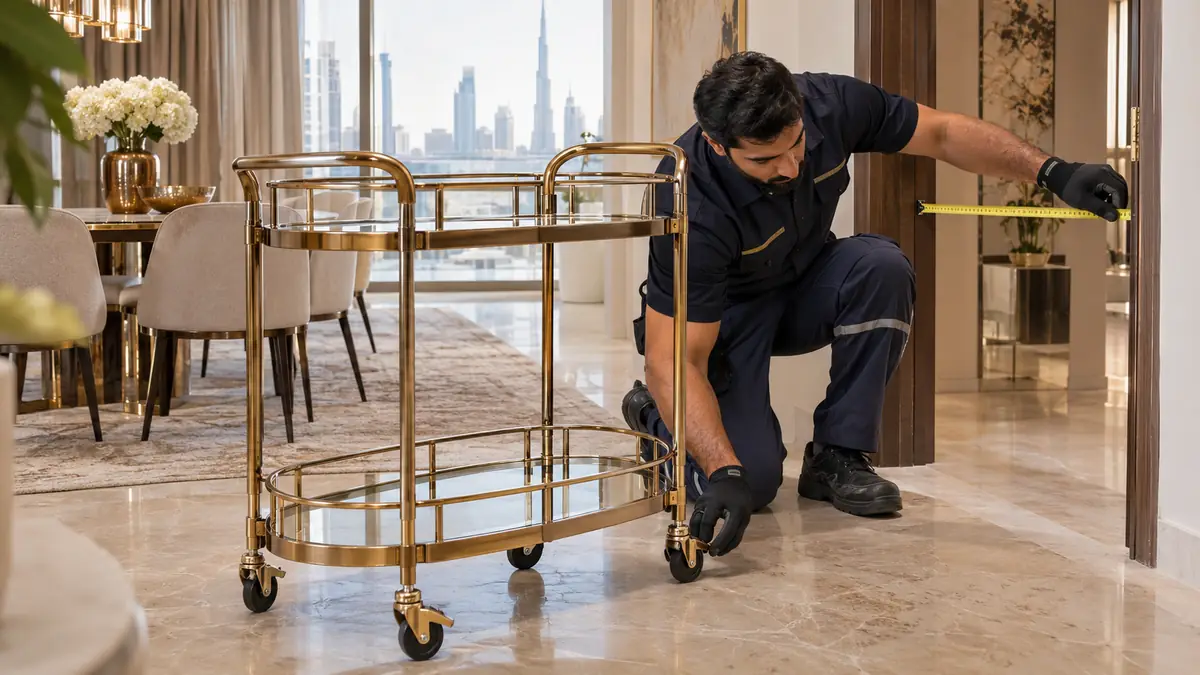
Measure overall width and height against the apartment door, corridor turns, service-lift opening and loading access. Ask management about a move permit and lift reservation. In towers, stage the vehicle before the trolley enters a common area; at a villa, check ramps and driveway slopes because a four-wheel cart can roll away as soon as the handler releases it.
Choose complete reuse or protected furniture collection
Keep a matched trolley together for resale or donation when its frame is stable, glass is unchipped and castors work. If the frame is bent or glass is broken, do not leave shards on the shelves or in a communal furniture area. Contain damaged glass separately, disclose it before pickup and let the receiving route decide how metal, timber and glass will be separated.
Can I roll a drinks trolley straight to the loading bay?
Only when it is empty, the route is level, every wheel is sound and management permits it. Small decorative castors can catch in lift gaps and thresholds. For most routes, lock or chock the wheels and place the protected frame on a proper furniture dolly controlled by the crew.
Should glass shelves stay in the trolley during collection?
Remove them only if they are designed to lift out and can be packed safely. Individually protect and transport them upright. Bonded or mechanically retained panels may be safer padded in place. Photograph the mount first and never force glass from a frame when the fixing method is unclear.
Can a tarnished brass bar cart be donated?
Possibly. Tarnish is cosmetic, while loose brazed joints, cracked glass and failed castors affect safety. Clean it gently, photograph every side and disclose faults and dimensions. The charity or recipient decides whether it fits their condition rules and must confirm a suitable vehicle and carrying plan.
What details help quote drinks-trolley collection?
Send photos, overall dimensions, frame material, number of glass or mirrored panels, and whether the shelves lift out. Include the floor, service-lift and loading access, wheel condition, any broken glass and the other furniture leaving during the same booked window.
Planning a clearance in Dubai?
Send photos of what you need cleared on WhatsApp. Our team provides an instant, fixed upfront rate and handles elevator bookings and gate security smoothly.
Specialists in residential and commercial clearances across Dubai since 2016. Committed to safe property handovers, compliant electronic waste disposal, and municipal green waste diversion.
 Ask a Question