How to Dispose of a Portable Air Conditioner in Dubai: Water, Refrigerant and Accessories
Drain condensate, retain the exhaust kit, photograph the refrigerant label and keep the sealed cooling circuit intact before arranging upright appliance recovery.
Drain and dry the condensate system before collection so water does not leak across floors, lifts or the transport vehicle.
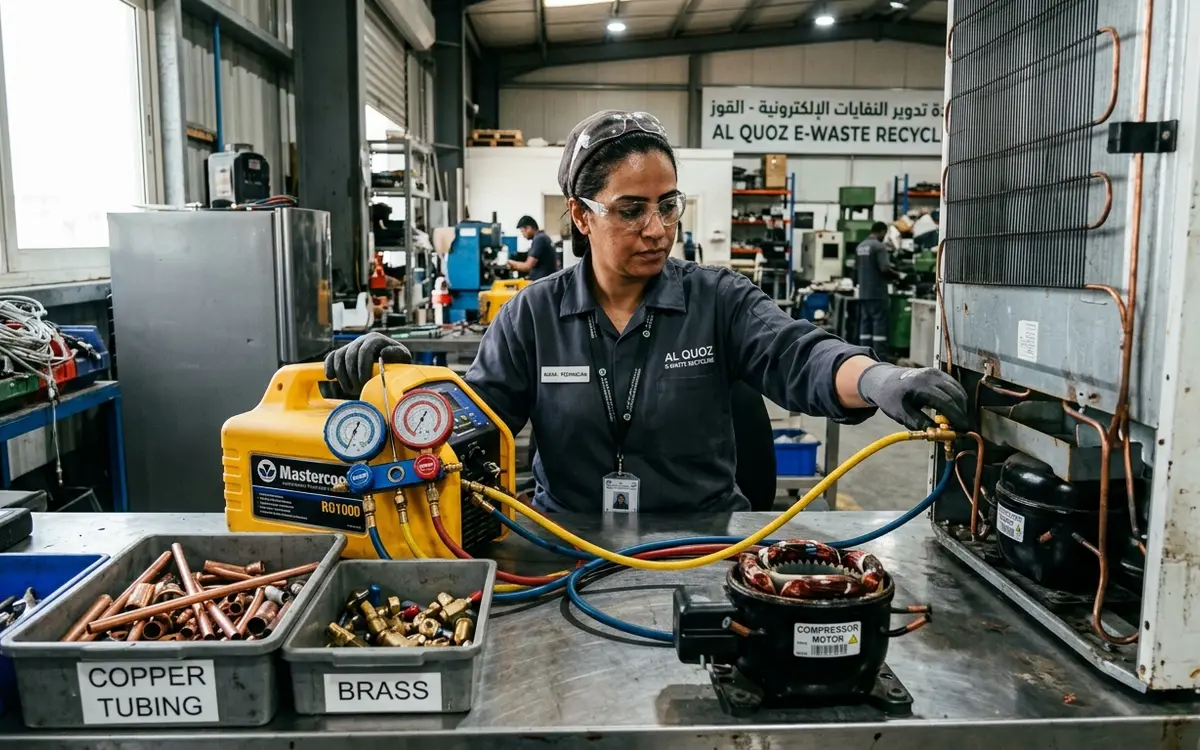
Keep the cabinet and refrigerant pipework sealed; a recovery facility, not the resident or removal crew, handles refrigerant extraction.
Pack the exhaust hose, window panel, drain tube and remote with the correct unit because a complete working set has greater reuse value.
How do you dispose of a portable air conditioner in Dubai?
To dispose of a portable air conditioner in Dubai, unplug it, let it stand, drain and dry its condensate system, clean removable filters, secure the cable, and pack the exhaust hose, window kit and remote. Photograph the refrigerant label, keep the cooling circuit sealed, move the unit upright and arrange appliance recovery.
A portable AC rolls like a small cabinet but still contains a compressor, refrigerant, oil, electronics and collected water. It should not be treated as ordinary plastic or metal. A complete, dry unit is also much easier to test, resell or repair before recycling becomes the final option.
Drain condensate and keep every accessory together
Switch the unit off, unplug it and follow the manual's standing period before handling. Move it to a suitable drainage point, open only the user drain provided by the maker and empty both upper and lower reservoirs where fitted. Replace drain caps, wipe the cabinet and allow the evaporator and collection tray time to dry.
Vacuum or wash user-serviceable filters according to the manual, then let them dry fully. Coil the power cable without crushing it. Label the exhaust hose, window slider, connector collars, drain tube and remote; these pieces are often separated during a move, even though a missing proprietary adapter can make an otherwise working unit difficult to reuse.
Do not vent or cut the sealed cooling circuit
Copper lines and the compressor can hold refrigerant and oil under pressure. Do not puncture, flatten or remove them for scrap; send the intact unit to a route equipped for refrigerant recovery.
Identify the appliance before it is collected
Photograph the model and rating plate, including the refrigerant type and charge. Share that image with the collector so the receiving facility can prepare the appropriate route. A failed fan, sensor or drain pump may be repairable; describe the fault, error code, noise and whether the compressor starts instead of repeatedly testing a unit that overheats.
Do not confuse a portable evaporative air cooler with a refrigerant air conditioner. An evaporative cooler usually has a refillable water tank and no compressor circuit, while a true portable AC exhausts heat through a hose. Both contain electrical parts, but only the latter normally requires refrigerant management.
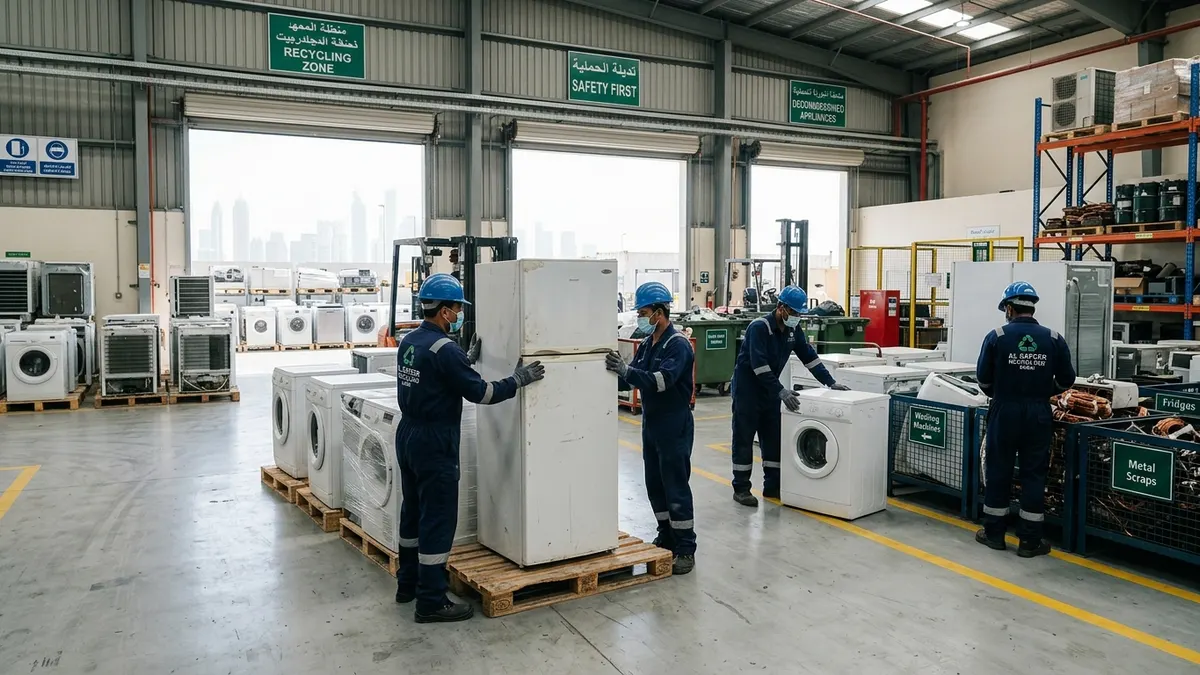
Specialist recovery keeps refrigerant contained before copper, steel, plastics and electronic controls are separated.
Move it upright and plan the summer collection window
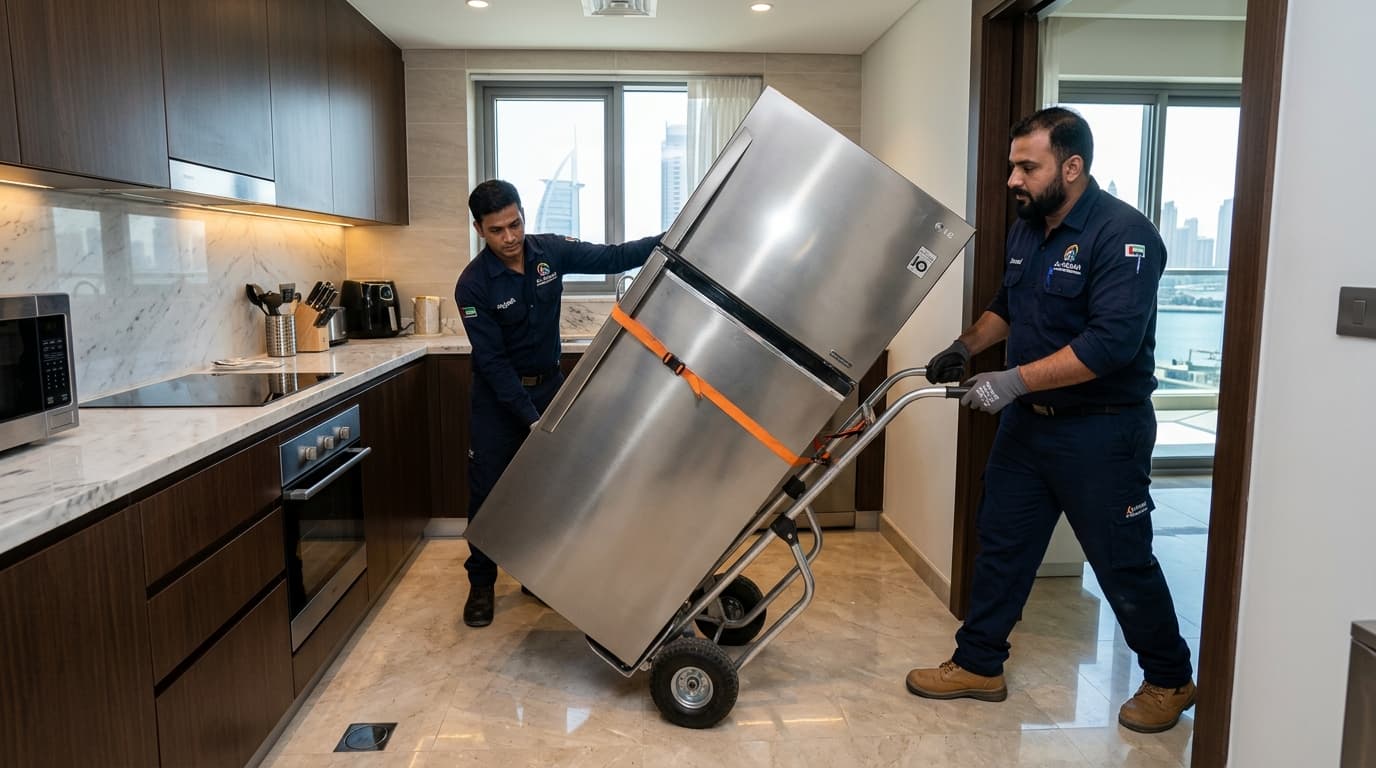
Keep the appliance upright on a stable trolley and use its castors only on smooth indoor floors. Do not drag it over lift gaps or stairs, lift by the exhaust collar, or stack items on top. In Dubai's summer heat, avoid leaving the unit in a closed vehicle or outdoor loading area while access is still being arranged.
Can I put a portable air conditioner beside the communal bins?
Do not leave it there without explicit building or collection approval. The appliance is bulky, may leak water and contains electrical and refrigerant components. Arrange an accepted appliance route and keep it inside your unit until the confirmed collection window and handover point are ready.
Must a portable AC be emptied before pickup?
Yes. Drain through the manufacturer-provided outlets, replace the caps and dry the reservoirs as far as practical. Tell the crew if the drain is blocked or the cabinet still contains water so they can protect the route, vehicle and lift while keeping the unit upright.
Can I remove the copper from a broken portable AC?
No. Cutting the cabinet or tubing can release refrigerant and compressor oil and creates sharp edges. Leave the sealed system intact for a qualified recovery facility that can remove controlled materials before separating recyclable metals, wiring, plastics and electronic controls.
Is a portable evaporative cooler handled the same way?
Not exactly. Drain and dry its water tank and route its motor, pump and controls as electrical equipment. Because it normally has no refrigerant circuit, the recovery step differs; confirm the model from its rating plate and manual rather than judging by appearance alone.
Planning a clearance in Dubai?
Send photos of what you need cleared on WhatsApp. Our team provides an instant, fixed upfront rate and handles elevator bookings and gate security smoothly.
Tags:#Portable AC Disposal#Refrigerant Recovery#Appliance Recycling#Summer Cooling
Dubai Junk Collection Editorial Team
Operations & Pricing Specialists
Specialists in residential and commercial clearances across Dubai since 2016. Committed to safe property handovers, compliant electronic waste disposal, and municipal green waste diversion.
 Ask a Question