How to Dispose of a Sandwich Maker in Dubai: Plates, Grease and E-Waste
Unplug and cool the sandwich maker, remove food and grease, keep fixed plates dry, secure the lid, and choose verified reuse or small-appliance e-waste.
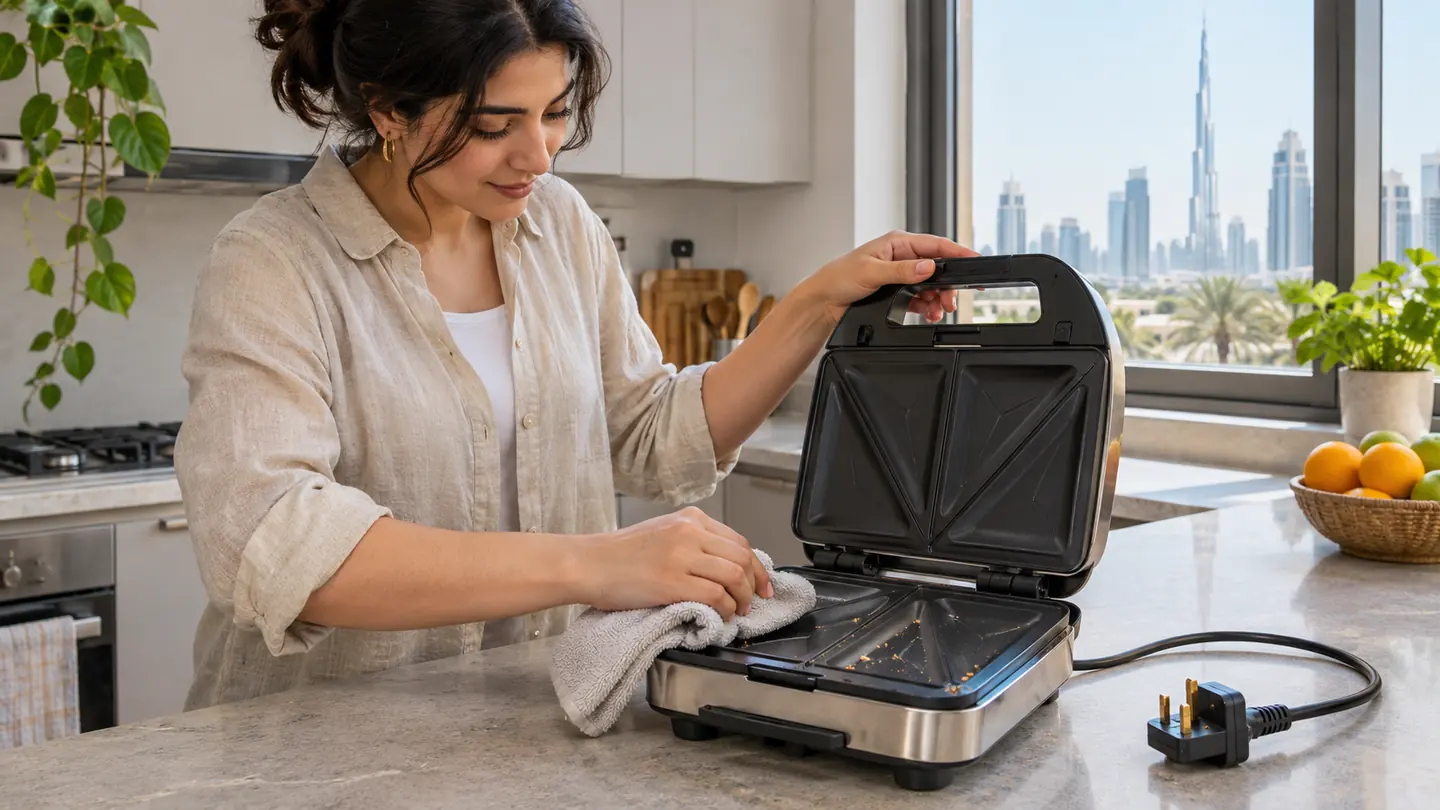
Switch off, unplug and let both plates cool completely before cleaning, moving or closing the appliance for collection.
Remove food and grease with the model-approved method; never immerse a fixed-plate sandwich maker or send it out with wet electrical parts.
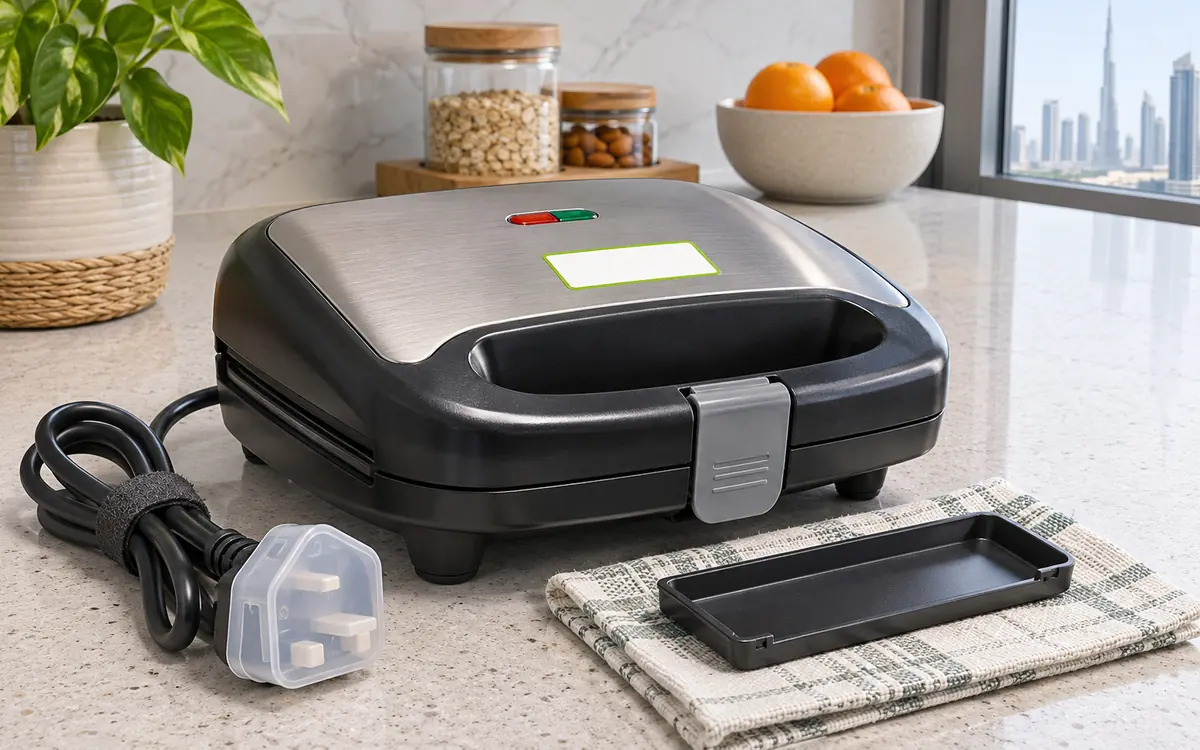
Engage the storage latch if supplied, secure the lead without crushing it, disclose coating or cord damage, and use verified reuse or e-waste.
How do you dispose of a sandwich maker in Dubai?
To dispose of a sandwich maker in Dubai, switch it off, unplug it and let both plates cool completely. Remove crumbs and grease using the model's cleaning instructions, keep the electrical housing dry, secure the lid and cord, disclose damaged non-stick coating or wiring, then arrange verified reuse or small-appliance e-waste collection.
The appliance combines food residue, hot plates, a hinged lid and electrical components in one compact shell. That makes preparation more important than size. A greasy unit contaminates other items, a warm plate can damage packaging, and a loose lid or trailing Type G plug can create a carrying hazard.
Cool it fully before removing crumbs and grease
Turn the control off if fitted, unplug at the wall and leave the press open on a stable heat-resistant surface until the upper and lower plates, handle and hinge are cool. Breville's sandwich-press guidance instructs users to switch off, unplug and cool the appliance before cleaning, and says not to immerse the press in water or other liquid.
Brush out loose crumbs and remove food without metal tools that can score a non-stick surface. Clean fixed plates and the housing only as the model manual permits. Wash a removable plate or drip tray separately when its instructions allow, then dry it completely before refitting or packing. Keep water away from the hinge, indicator lights, thermostat, cord entry and underside vents.
Do not power up an appliance with a split cable, loose plug, scorch mark, swollen casing, exposed conductor or liquid inside. Photograph the fault and label it for the receiver. A failed latch is also worth declaring because the heavy upper plate may open when the unit is lifted.
Do not immerse the powered body
Many sandwich makers have fixed plates above live electrical parts. Keep the unit unplugged and dry, and do not open its housing. An internally wet, scorched or damaged press needs professional assessment or an electrical-waste route.
Secure the hinge, latch and lead without hiding damage
When the appliance is clean, dry and cold, close it gently and use its designed storage latch. Do not force a latch over warped plates or tie the lid so tightly that the hinge is loaded. Coil the lead loosely around the maker's storage point if provided, protect the plug pins and avoid a sharp bend where the cable enters the casing.
Keep removable plates and trays with the correct model, cushioned so their non-stick faces do not rub. Pack the unit flat and upright in a low box with no heavy appliance on top. In a tower kitchen clearance, put it in a small-appliance crate rather than a loose bag that can tear between the apartment and service lift.
A collection-ready press is cool, free of food, dry, latched and packed with its matched removable parts.
Choose reuse only when the complete appliance is safe
Reuse suits a clean appliance that heats evenly, closes normally and has intact plates, insulation, lead and plug. Disclose worn coating, a weak hinge, missing tray or intermittent light. A press with peeling non-stick material, exposed wiring, overheating or repeated tripping should not be donated for someone else to test; route it to repair assessment or a confirmed electrical receiver.
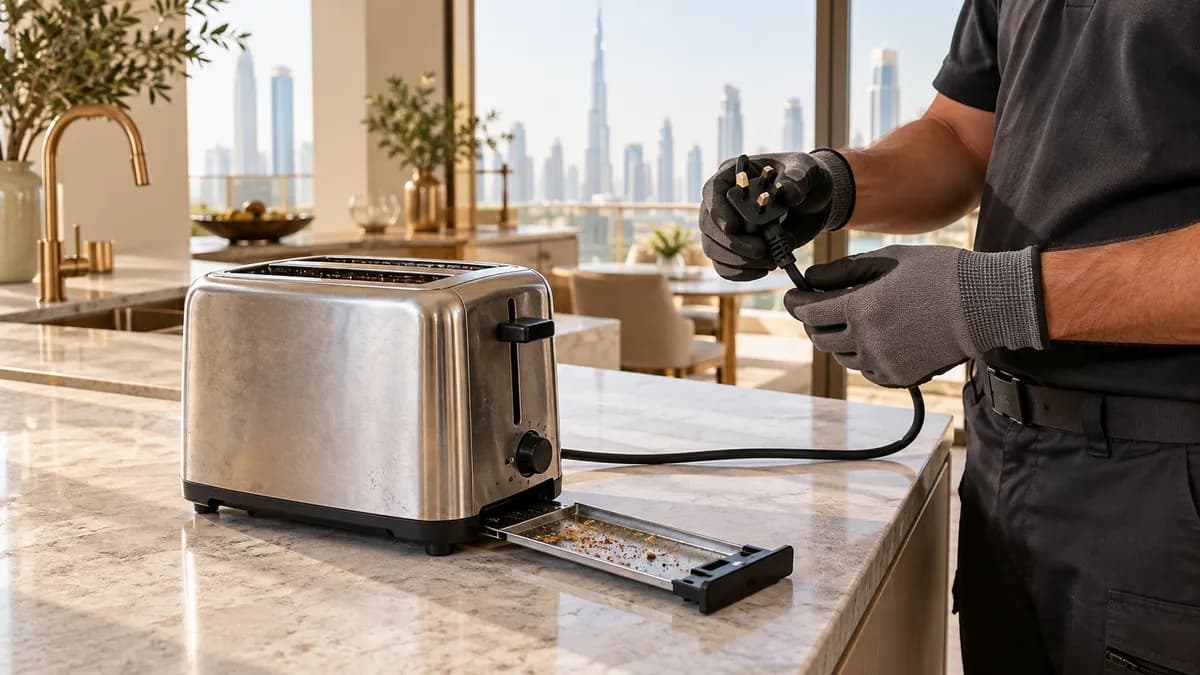
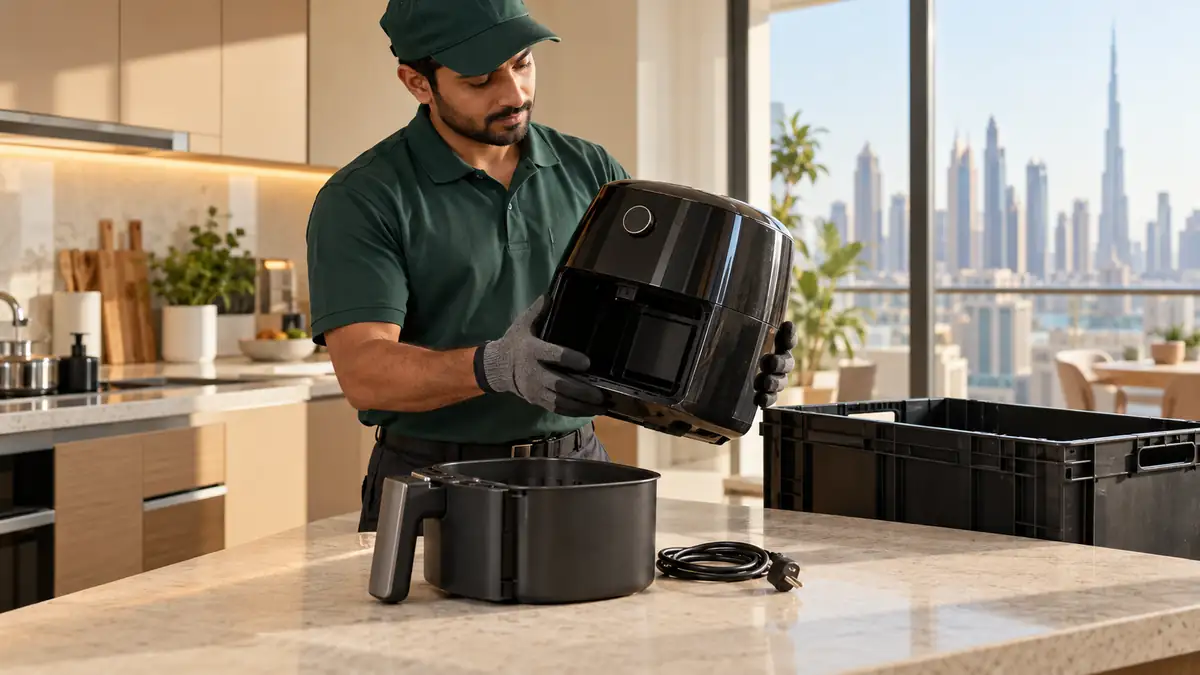
Dubai Municipality includes used electrical appliances within its bulky-waste service, subject to current eligibility and area conditions, although a confirmed small-electrical point may be more practical for one press. Our appliance removal service can combine it with a kitchen clearance in Dubai Marina. Related guides cover toasters, air fryers and electronics recycling.
Use a confirmed small-appliance or e-waste route instead. The press contains wiring, a thermostat, heating elements and mixed materials, and food residue should be removed first. Ask the receiver what it accepts rather than placing the complete electrical appliance in a general bin.
Should I remove the non-stick plates before recycling it?
Remove plates only when the manufacturer designed them to release without tools. Clean, dry and keep those matched parts with the appliance. Do not pry out fixed plates or dismantle the powered housing; the receiving facility should decide how its mixed metal, coating and electrical components are processed.
Can I donate a sandwich maker with scratched plates?
Describe and photograph the damage before offering it. Light cosmetic wear and peeling or deeply scored coating are not equivalent. If the food-contact surface, hinge, lead or plug may be unsafe, seek the manufacturer's or a qualified repairer's advice and choose repair or e-waste rather than casual donation.
What details help quote sandwich-maker collection?
Show the appliance open and closed, its label, plates, hinge, latch, cord, plug and removable trays. Confirm that it is unplugged, fully cool, empty and dry, and disclose coating damage, overheating or liquid ingress. List other appliances because combining small items is usually more practical.
Planning a clearance in Dubai?
Send photos of what you need cleared on WhatsApp. Our team provides an instant, fixed upfront rate and handles elevator bookings and gate security smoothly.
Specialists in residential and commercial clearances across Dubai since 2016. Committed to safe property handovers, compliant electronic waste disposal, and municipal green waste diversion.
 Ask a Question