How to Dispose of an Ice Maker in Dubai: Reservoirs, Refrigerant and Built-In Water Lines
Unplug and drain the reservoir, dry it with the lid open, sell or pass on clean working units, have a plumber isolate built-in models, and send faulty ice makers whole to a recycler that recovers refrigerant.
A countertop ice maker is a small refrigerator: it has a compressor and a sealed refrigerant circuit, so it belongs with cooling appliances, not general small electricals.
Water left in the reservoir and on the evaporator turns into mould and leaks in transit, so drain it and let it dry with the lid open before anyone moves it.
Built-in and under-counter models are plumbed to a water line and often a drain, so a plumber isolates them first and, in a rental, the landlord confirms who owns them.
How do you dispose of an ice maker in Dubai?
To dispose of an ice maker in Dubai, unplug it, drain the reservoir and let it dry with the lid open. Sell or pass on clean working units. Send faulty ones whole to an appliance recycler that recovers refrigerant, and have a plumber isolate any built-in model before it is pulled out.
Ice makers are popular in Dubai for obvious reasons, and they tend to leave a home when a family moves, when the unit starts producing small or cloudy ice, or when a newer fridge with a built-in dispenser makes it redundant. Because they look like a kettle-sized countertop gadget, people often treat them as a small electrical. Inside, they work like a compact fridge, and that changes where they should go.
Drain and dry it before it moves
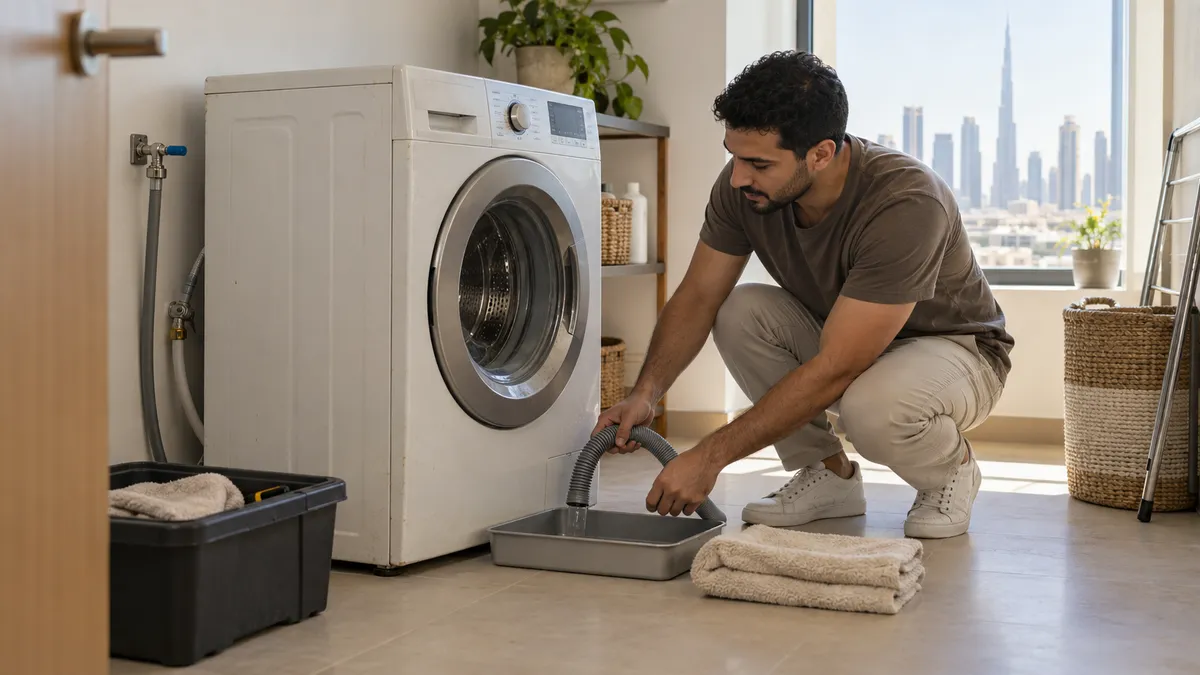
Unplug the machine and empty the ice basket. Most countertop models have a drain plug or cap on the underside or near the base at the front. Stand the unit on the edge of the sink or over a tray, pull the plug and let the reservoir empty completely, then tilt it gently to clear the last of the water. Leave the lid open for a day so the evaporator prongs and the inside of the tank dry out.
This step matters more than it seems. An ice maker that is carried with water inside will leak across a lift floor, and one that is sealed up wet will smell of mould within days, which ends any chance of resale. Wipe the basket and the reservoir with a mild vinegar solution if there is limescale or slime, and dry everything before the lid is closed.
Keep it upright
Carry and transport an ice maker upright, the same way you would a fridge. If it is going to a new owner, tell them to let it stand for a few hours before switching it on, so the compressor oil can settle. Check the manual for the exact time.
Built-in and under-counter models need a plumber first
Under-counter ice makers in villa kitchens, home bars and outdoor kitchens are a different job. They are connected to a cold-water supply line, often through an inline filter, and many have a gravity drain or a drain pump connected to the kitchen waste pipe. A plumber should close the isolation valve, disconnect and cap both lines, and check for leaks before the unit is slid out of its cabinet.
In a rental, check the inventory before arranging removal. A built-in ice maker that came with the villa is the landlord's, just like the oven or the hob, and taking it can turn into a deduction. If it is yours and you are leaving, ask the plumber to leave the open cabinet space clean and dry, with the water line capped, so the next tenant or the landlord's contractor can fit a replacement.
Why a faulty ice maker goes to a refrigerant recycler
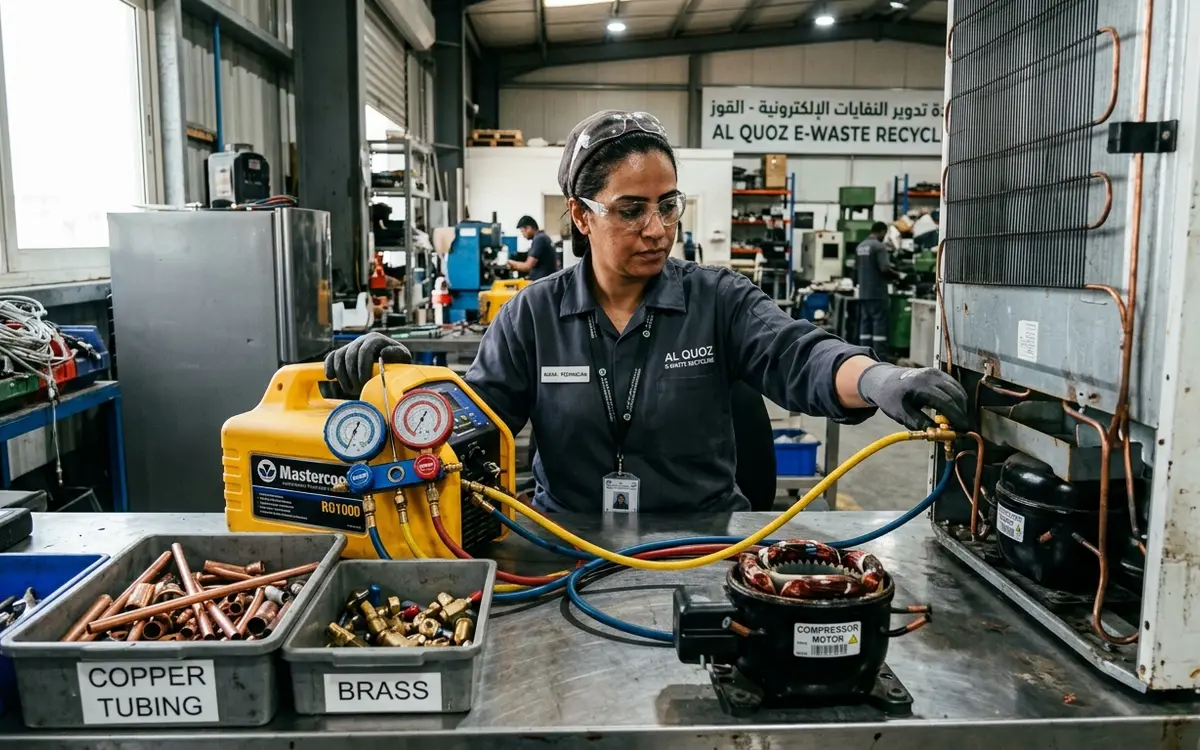
Every compressor ice maker has a sealed circuit holding a small charge of refrigerant, and the rating plate on the back or the base names the type. That charge should be recovered by equipment designed for it before the metal is separated. A recycler that handles fridges and air conditioners will do this; a scrap trader who cuts the copper pipes to get at the metal releases it instead.
So a faulty ice maker should travel whole, with its pipes and compressor intact, to an appliance recycler that recovers refrigerant. Do not cut the power cord short or remove the compressor to make it lighter. Working units in clean condition are worth selling or giving away, and commercial cube machines from cafes and restaurants are often bought back by refrigeration technicians for parts.
Refrigerant is recovered from sealed cooling circuits before copper, brass and steel are separated for recycling.
Book collection with the rest of the kitchen
An ice maker is light enough for one person to carry, so it is usually collected alongside other kitchen appliances rather than on its own. Group it with anything else leaving, list which items work, and keep the drained ice maker upright on a towel near the door. For towers, the usual service lift booking applies. For villas with outdoor kitchens, mention whether the unit is built into a counter.
No. It contains refrigerant, a compressor and electronics, so it is an electrical appliance rather than household rubbish, and placing it in a bin room is usually treated as dumping by building management. Keep it in the unit until it is collected or taken to an appliance recycler.
Is an ice maker with a noisy compressor worth repairing?
Sometimes. Noise, slow ice or small cubes are often caused by scale, a blocked water sensor or a failing fan rather than the compressor itself. Descale it first. If the compressor has failed on an inexpensive countertop model, the repair usually costs more than a replacement.
What should I do with the water filter cartridge?
Remove used filter cartridges from built-in models before collection and dispose of them with general waste unless the manufacturer runs a take-back scheme. Unopened spare cartridges can be sold or given away with the machine, since buyers often struggle to find the right size.
What details help quote ice maker collection?
Send a photo of the unit and its rating plate, and say whether it is countertop, built-in or a commercial cube machine. Mention whether it has been drained, whether a plumber has disconnected it, and any other appliances leaving at the same time.
Planning a clearance in Dubai?
Send photos of what you need cleared on WhatsApp. Our team provides an instant, fixed upfront rate and handles elevator bookings and gate security smoothly.
Specialists in residential and commercial clearances across Dubai since 2016. Committed to safe property handovers, compliant electronic waste disposal, and municipal green waste diversion.
 Ask a Question