How to Dispose of an Office Paper Cutter in Dubai: Blades, Guards and Records
Clear confidential scraps, identify the cutter type, keep guards fitted, lock the handle or cutting head, release the asset, and arrange safe commercial collection.
Clear readable offcuts and test pages through the office's approved records process before the cutter leaves controlled custody.
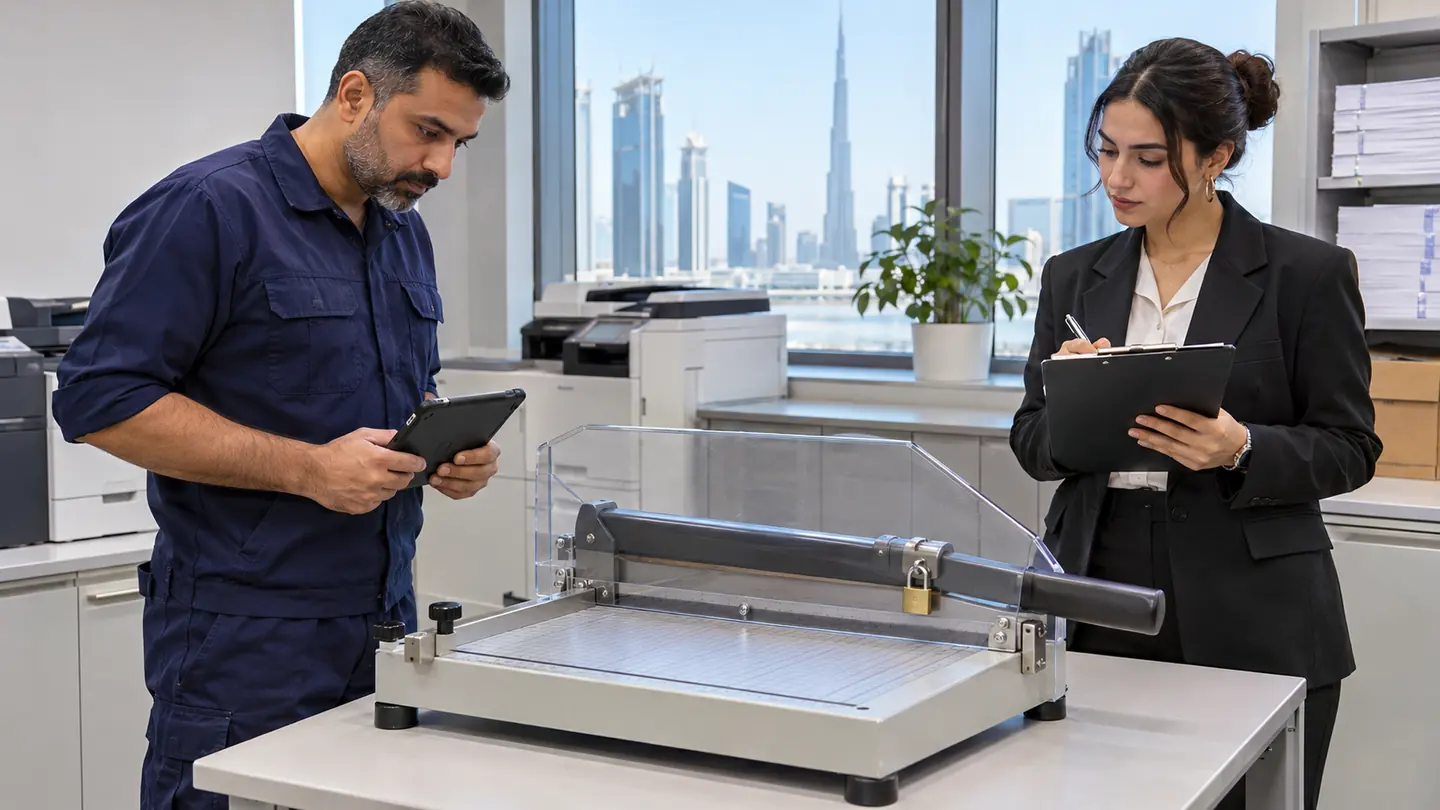
Keep every factory guard fitted and use the designed transport lock for a guillotine handle or rotary cutting head; never touch the blade edge.
Identify manual versus powered equipment, record its size and base stability, then arrange competent commercial collection without dismantling the blade assembly.
How do you dispose of an office paper cutter in Dubai?
To dispose of an office paper cutter in Dubai, clear confidential offcuts, identify whether it is rotary, guillotine or powered, and complete the asset release. Keep factory guards fitted, lock the blade carriage or handle in its transport position, secure guides and accessories, then arrange competent office-equipment collection without dismantling the cutting assembly.
A tabletop cutter may contain no electronics yet still be one of the sharpest assets in a print room. The risk changes by design: a rotary trimmer has a moving cutting head, a guillotine has a lever blade, and a powered cutter combines guards, interlocks and electrical isolation with significant weight.
Close the records and ownership trail before moving the machine
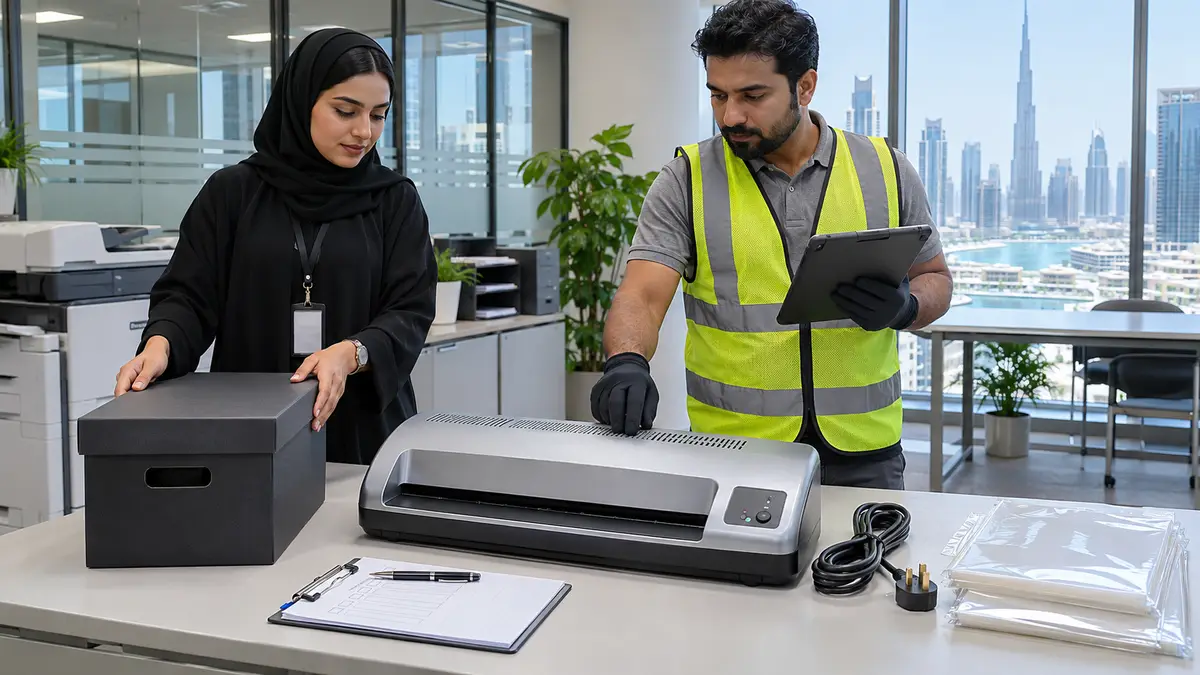
Ask the records owner to remove test sheets, rejected covers, labels and readable offcuts from the cutting bed, scrap tray and surrounding bench. Route confidential fragments through the contracted destruction process inside the controlled office. A collection crew should never have to decide whether a client name, signature or account number is sensitive at the loading bay.
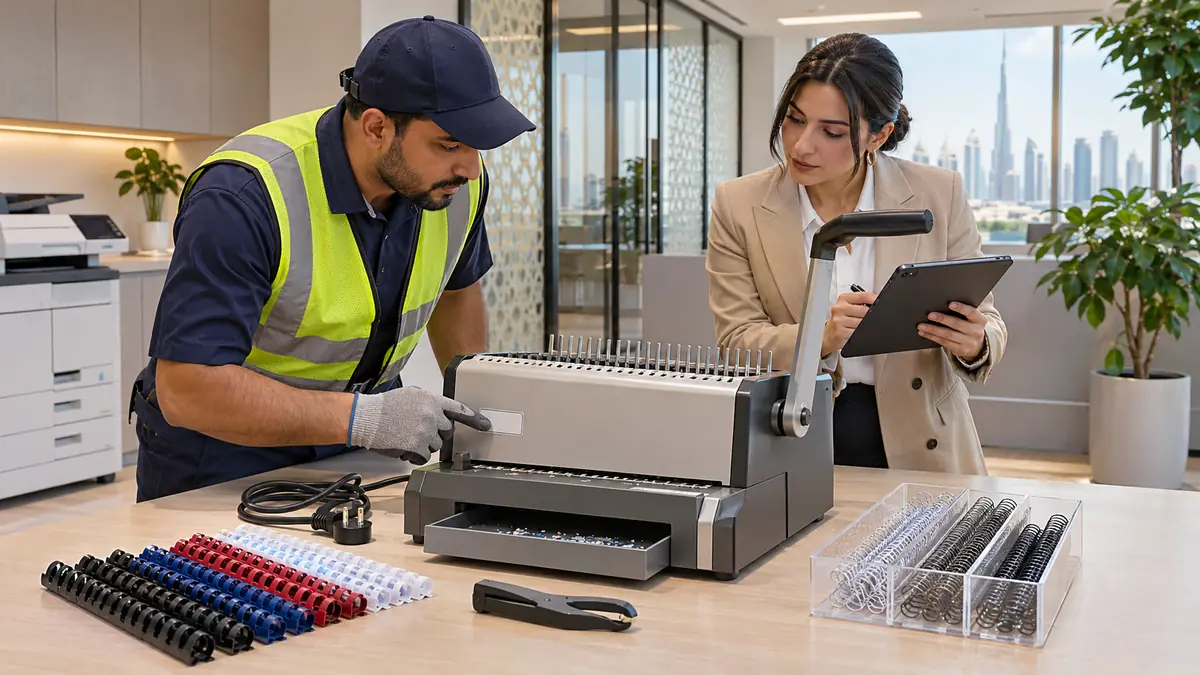
Check the asset register, serial number, lease, maintenance agreement and supplier take-back terms. Powered stack cutters and print-room finishing systems may be leased or serviced as part of a larger contract. Record removable keys, foot controls, backstops, spare cutting sticks and model-specific tools, but do not include loose blades in an unmarked accessories box.
Photograph the full machine and route. A small rotary cutter can travel on a padded trolley; a floor-standing stack cutter may need a specialist assessment for mass, centre of gravity, stand attachment and service-lift capacity. Confirm building management approval and loading access before an occupied office corridor is used.
Never remove a blade for easier transport
Leave the cutting assembly, guard and interlocks intact. Blade removal, sharpening and repair belong to a trained service provider using the exact model procedure. Tell the collector about missing guards, failed locks or exposed edges before arrival.
Use the designed guard and transport lock
For a manual guillotine, clear the bed, lower the handle only as the manual specifies and engage the factory lock or transport guard. Fellowes states that its SafeCut guard folds down for transport and storage and holds the handle down, while warning users not to touch the cutting blade or edge. Do not substitute tape for a missing safety component.
Park a rotary head in its designated position and engage its lock or enclosed-blade mechanism. For powered equipment, shut down normally, switch off, unplug and isolate according to the manufacturer and workplace procedure. Secure the lead, guides and clamp without reaching under the blade. Keep the base flat; carrying a cutter on edge can release guides or turn the handle into a lever.
Clear the records first, then keep the cutter flat with its guard, handle and guides secured exactly as designed.
Match the cutter type to a safe reuse or recovery route
Reuse is appropriate only when the base is stable, scale and guide are usable, the guard is complete, the blade movement is controlled and every lock works. Disclose a dull blade, damaged strip, loose lever or missing shield. Do not demonstrate a faulty machine for a recipient or improvise a cardboard blade cover that could slip during handling.
Usually not, because a fully manual guillotine or rotary trimmer has no powered circuit, but it still contains a hazardous cutting assembly and mixed materials. A powered stack cutter is electrical equipment. Identify the model and ask the contracted receiver rather than choosing a stream by appearance alone.
Should I remove or wrap the blade before collection?
Do not remove it. Keep the manufacturer's guard installed and engage the designed transport lock for the handle or cutting head. If a guard or lock is missing, isolate access to the machine and arrange advice from the maker, service provider or competent collector before anyone moves it.
What happens to confidential paper scraps around the cutter?
The office should clear and destroy them under its existing records policy before facilities releases the asset. Check the cutting bed, guide, clamp, scrap tray and nearby floor. Do not mix readable fragments into general paper recycling or leave them for the removal crew to review.
What information helps quote paper-cutter removal?
Provide the make, model, cutter type, dimensions and approximate weight, plus photos of the base, blade area, guard, handle or carriage, stand and access route. Confirm asset ownership, whether it is powered, and whether all records are cleared and every safety lock works.
Planning a clearance in Dubai?
Send photos of what you need cleared on WhatsApp. Our team provides an instant, fixed upfront rate and handles elevator bookings and gate security smoothly.
Specialists in residential and commercial clearances across Dubai since 2016. Committed to safe property handovers, compliant electronic waste disposal, and municipal green waste diversion.
 Ask a Question