Understand how responsible appliance disposal works in Dubai. From certified refrigerant recovery to scrap metals, discover how to clear white goods safely without fines.
Responsible appliance disposal in Dubai requires certified refrigerant recovery (R-134a, R-410A, R-22) before metal shredding to prevent atmospheric damage and municipal fines.
Rogue 'free scrap' pickup vans frequently vent toxic refrigerants, strip high-value copper coils, and fly-tip heavy plastic casings in open industrial zones or desert margins.
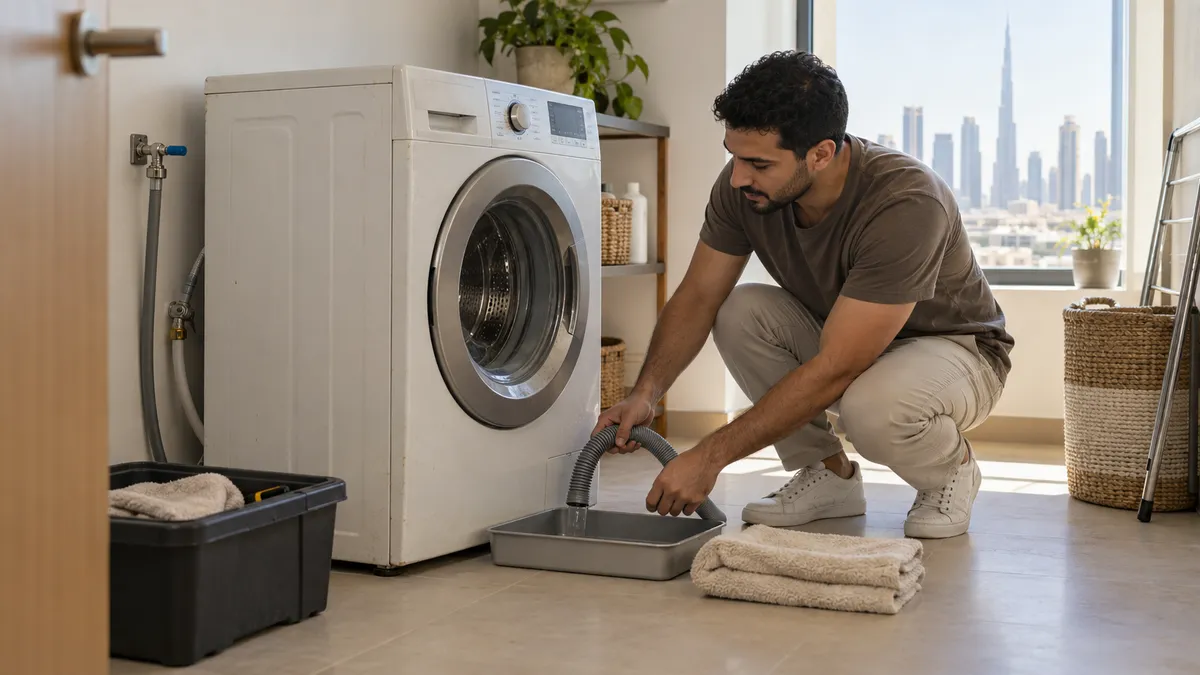
White goods must be disconnected, fully defrosted, and drained 24 hours prior to clearance to prevent corridor water damage and elevator breakdowns.
Commercial and residential tenancy handovers require documented disposal pathways or licensed haulage to avoid Ejari security deposit holdbacks.
What does responsible appliance disposal in Dubai actually entail?
Responsible appliance disposal in Dubai means collecting outdated white goods, evacuating hazardous refrigerants and compressor oils through certified closed-loop systems, and separating copper, aluminium, and steel for recycling. Rather than sending bulky appliances to municipal landfills, licensed services divert over 85% of component materials back into circular industrial manufacturing.
Every week across Dubai—from luxury waterfront penthouses in Dubai Marina and Palm Jumeirah to family villas in Arabian Ranches and Dubai Hills Estate—residents replace aging refrigerators, washing machines, freezers, and split air conditioning systems. The extreme desert climate, characterized by prolonged summer temperatures exceeding 45°C and high coastal humidity, subjects domestic appliances to intense operational stress. Compressors fail, cooling coils corrode, and condenser fans seize up far faster than in temperate zones.
When it comes time to upgrade or vacate a rental property, getting rid of a two-hundred-kilogram double-door refrigerator or a rusted top-load washer is rarely as simple as hauling it to the street. Dubai Municipality imposes stringent regulations on bulky waste, and environmental protection laws strictly prohibit venting refrigerants into the atmosphere. Understanding the mechanics of responsible appliance disposal protects you from steep penalties, ensures seamless building management sign-offs, and safeguards the UAE's fragile desert ecosystem.
Refrigerant degassing: Why venting freon is strictly illegal
The single greatest environmental hazard associated with discarded cooling appliances is refrigerant gas. Domestic refrigerators, freezers, wine coolers, and air conditioners utilize hydrofluorocarbons (HFCs) such as R-134a and R-410A, or older hydrochlorofluorocarbons (HCFCs) like R-22. When released into the atmosphere, these fluorinated gases exhibit global warming potentials hundreds to thousands of times greater than carbon dioxide.
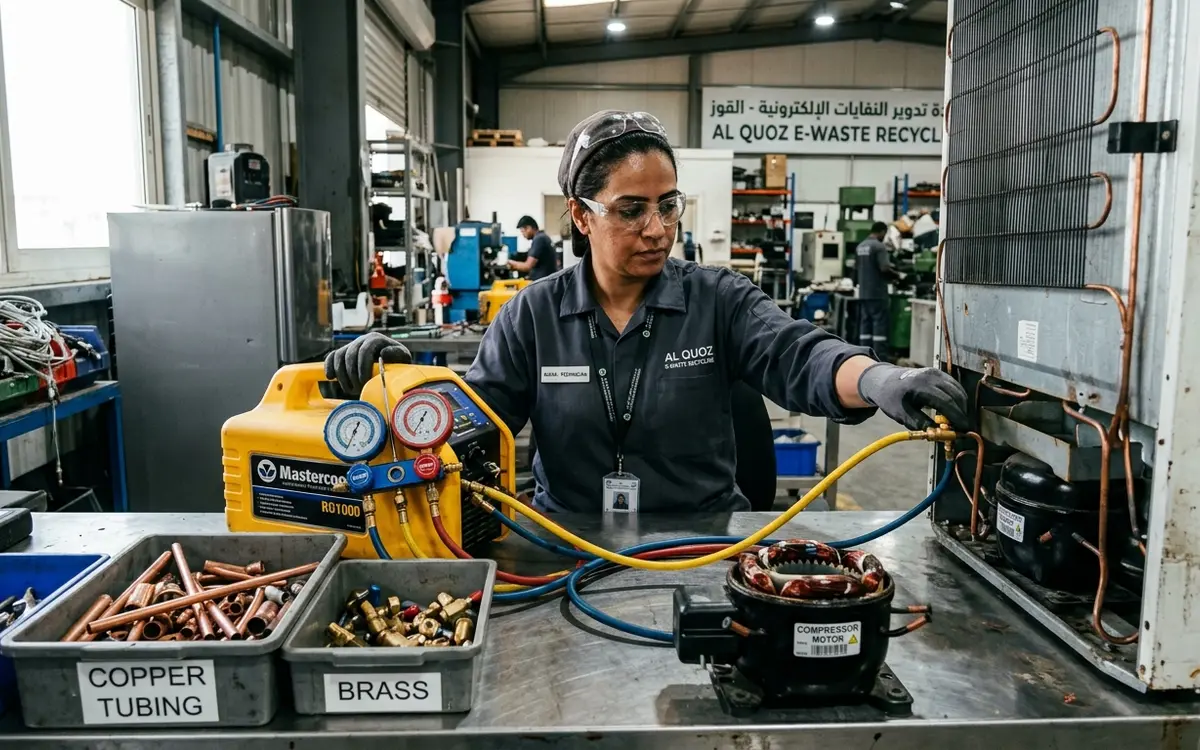
Under UAE Federal Law No. 12 of 2018 on Integrated Waste Management and technical guidelines enforced by Dubai Municipality's Environment, Health and Safety (EHS) department, venting refrigerant gas during equipment decommissioning is a punishable violation. Certified technicians must utilize specialized recovery units—sealed vacuum pumps and DOT-rated pressure recovery cylinders—to evacuate both gaseous and liquid refrigerants in a hermetic closed loop before any physical cutting or dismantling takes place.
Once recovered, contaminated gases undergo chemical reclamation or high-temperature thermal destruction at licensed hazardous waste facilities, preventing ozone depletion and atmospheric warming.
The hidden danger of unlicensed 'free pickup' scrappers
Unlicensed scrap collectors who offer 'free appliance collection' on social media or flyer cards usually puncture cooling lines with wire cutters to release gas instantly into the open air, rip out the copper motor, and dump the insulated polyurethane cabinet on empty plots. Under Dubai Municipality regulations, illegal dumping carries fines starting from AED 500 up to AED 10,000 for repeat offenders.
The 5-stage physical recycling lifecycle of white goods
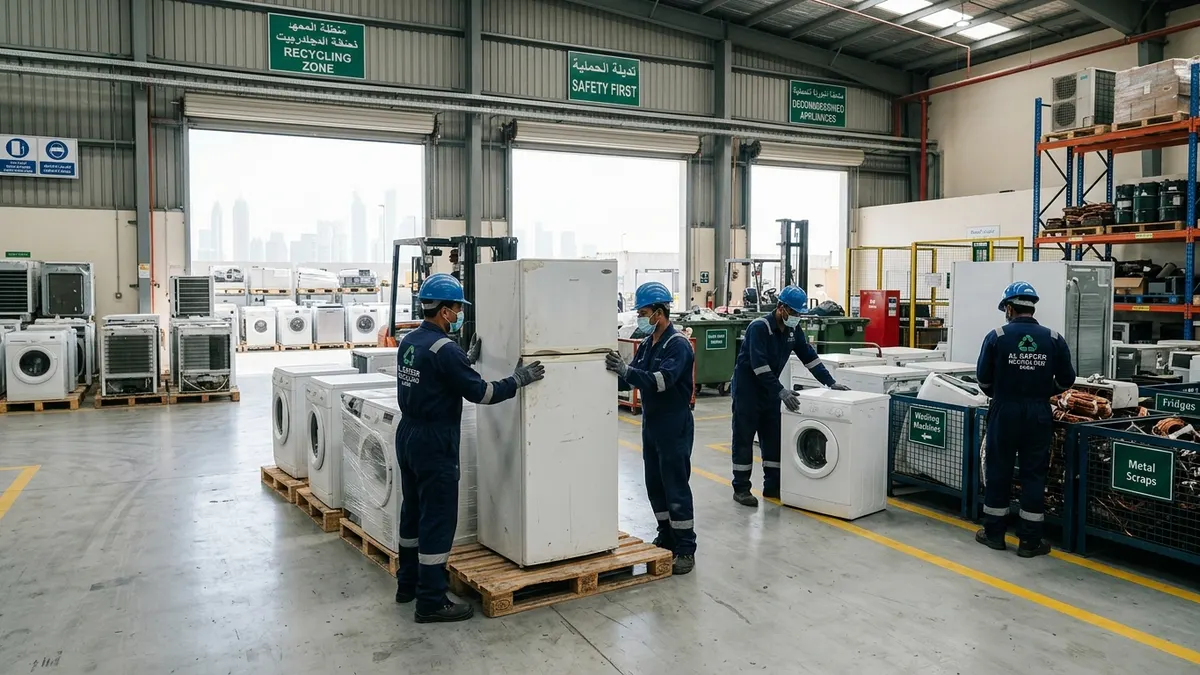
Once major appliances arrive at a licensed e-waste and scrap processing facility in industrial hubs like Al Quoz or Dubai Industrial City (DIC), they undergo a rigorous five-stage decontamination and material segregation workflow.
First, technicians inspect each unit to catalogue serial numbers and isolate toxic sub-components, such as polychlorinated biphenyl (PCB) capacitors in older microwave ovens or mercury switches in vintage chest freezers. Second, recovery pumps draw down the compressor oil and refrigerant. Third, manual demanufacturing separates rubber door gaskets, tempered glass shelves, plastic crisper bins, and exterior handle hardware. Fourth, heavy electric motors, copper stator coils, brass valve fittings, and aluminum condenser fins are removed for high-grade non-ferrous metallurgical smelting. Finally, the remaining stamped-sheet steel chassis passes through an industrial shredder and magnetic separator, emerging as dense ferrous scrap pellets that local steel mills melt into rebar for regional construction projects.
Certified vacuum evacuation and component triage at an authorized recycling facility in Al Quoz, Dubai.
Responsible professional disposal vs. rogue scrap collectors
Many Dubai residents wonder whether paying for professional bulky removal is necessary when freelance pick-up trucks offer to haul white goods away at no charge. While the promise of free collection sounds convenient, the operational differences between licensed services and unregulated scrap hunters carry major legal and financial ramifications for property owners.
Operational standards: Licensed professional disposal vs. unregulated scavengers in Dubai
Operational Factor
Licensed Professional Service
Unregulated Scavengers / Free Vans
Refrigerant Recovery
Closed-loop vacuum recovery into sealed DOT cylinders
Lines severed with snips; freon vented directly into the air
Zero paperwork; leaves tenant vulnerable to Ejari deposit deductions
Material Diversion Rate
85% to 92% diverted into verified circular recycling streams
High-value copper cherry-picked; bulk plastics discarded in vacant lots
Building access, lift booking and tenancy handover logistics
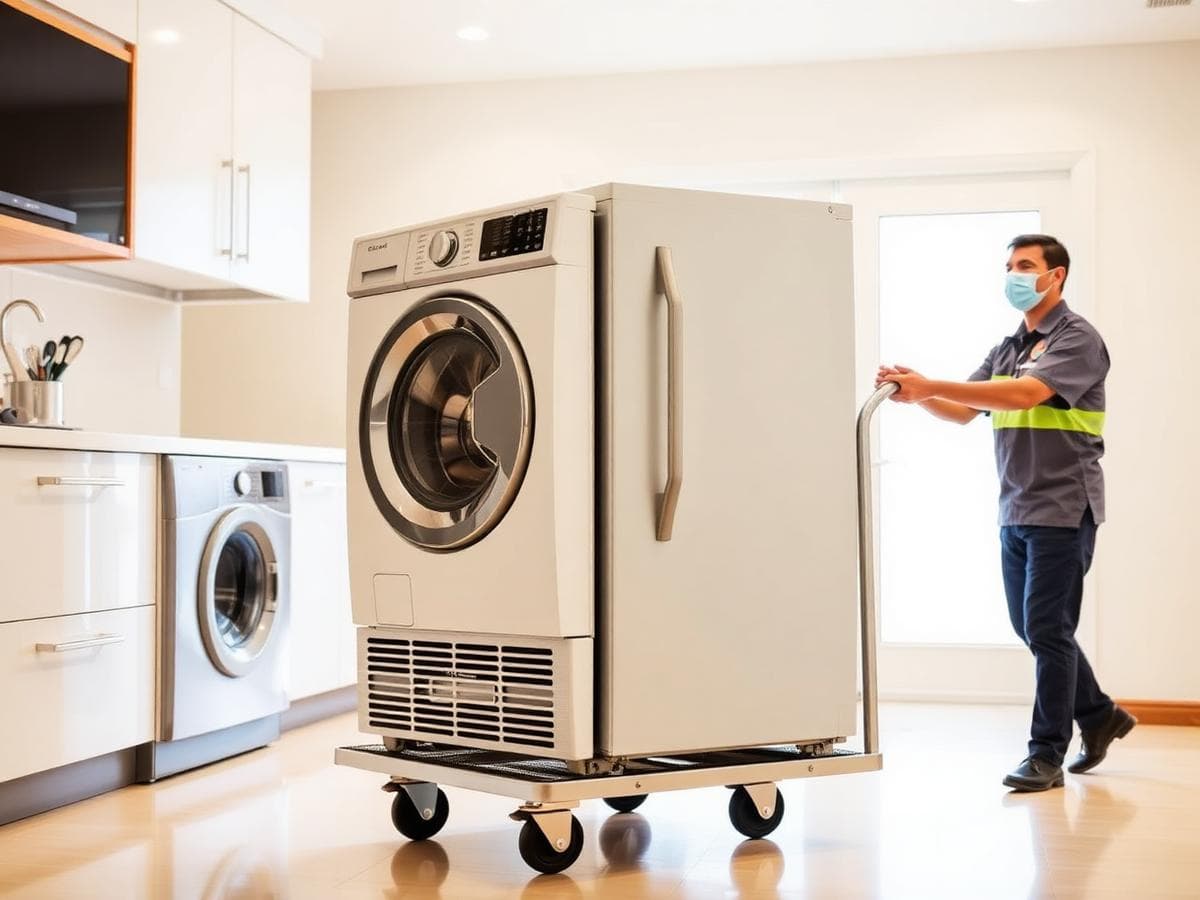
Hauling heavy domestic appliances out of Dubai residences requires meticulous logistical coordination. High-rise residential towers in Downtown Dubai, Business Bay, Jumeirah Beach Residence (JBR), and Dubai Marina strictly mandate that moving and disposal crews submit an official Move-Out Permit or Contractor Entry Permit (NOC) at least 24 to 48 hours prior to arrival.
Property management companies require proof of commercial insurance, valid company trade licenses, and Emirates ID copies for every crew member entering the service basement or loading bay. Service elevators must be reserved in specific two-hour time slots, and elevator walls must be lined with protective canvas curtains to prevent structural damage.
If you are clearing out a property at the end of your lease, leaving an abandoned washing machine or non-functional refrigerator in the corridor or basement dumpster will result in building management fining the tenant and withholding deductions from your tenancy security deposit. By booking a dedicated clearance team, you ensure seamless compliance with Ejari exit standards and building community rules. For more specialized guides on single-item clearance, review our walkthroughs on how to dispose of an old fridge in Dubai, where to dispose of a washing machine in Dubai, and how to get rid of an old AC unit in Dubai.
Prepare your appliance 24 hours before pickup
Always disconnect refrigeration units at least 24 hours in advance, empty internal drip trays, and leave doors ajar over towels to prevent foul mildew odors and water leakage in residential elevators during transport.
Do I need to degas my refrigerator before the removal crew arrives?
No. Homeowners should never attempt to degas appliances themselves, as high-pressure refrigerants can cause severe frostbite, respiratory hazards, and fires. Our licensed removal teams transport intact units directly to certified recovery facilities equipped with specialized closed-loop evacuation pumps.
Can broken appliances still be recycled if the compressor motor is burned out?
Yes. Even if an appliance is completely dead or mechanically seized, virtually all structural materials remain valuable for recycling. The copper motor windings, aluminium heat exchanger tubes, and heavy steel casing are melted down and repurposed regardless of operational condition.
Why won't municipal trash trucks take my old washing machine from the curb?
Dubai Municipality compactor trucks are engineered exclusively for domestic bagged rubbish. Heavy metal appliances damage the hydraulic compactor blades and contain hazardous components that are strictly prohibited in municipal domestic landfills. Bulky items require dedicated private haulage or scheduled bulky waste collection.
What happens to the hazardous capacitors inside microwave ovens and AC condensers?
High-voltage capacitors store electrical charges even when unplugged and may contain dielectric oils. Licensed e-waste recycling depots safely discharge capacitors using insulated grounding tools, extract them from the chassis, and channel them into hazardous electronic waste treatment streams.
Planning a clearance in Dubai?
Send photos of what you need cleared on WhatsApp. Our team provides an instant, fixed upfront rate and handles elevator bookings and gate security smoothly.
Specialists in residential and commercial clearances across Dubai since 2016. Committed to safe property handovers, compliant electronic waste disposal, and municipal green waste diversion.
 Ask a Question