How to Dispose of Old Filing Cabinets in Dubai: Locked Drawers, Paper Records and Heavy Steel
An old filing cabinet is a records problem first and a lifting problem second. Here is how to empty, unlock, move and recycle steel and fire-rated cabinets from a Dubai office.
Clear the records before the furniture: decide what must be kept, what goes for certified shredding and what is ordinary recycling.
Search every drawer back and the space under the bottom drawer, where loose documents usually hide.
A lost key calls for a locksmith or a drilled lock barrel, never a crowbar that bends the runners and wrecks resale value.
Good steel cabinets resell or go to reuse; damaged ones go to metal recycling, and fire-rated units need extra lifting capacity.
How do you dispose of an old filing cabinet in Dubai?
Empty it completely and send confidential paper for certified shredding first. Open any locked drawers with the key or a locksmith, then remove the drawers or tape them shut. Move the cabinet upright on a strapped trolley through a booked service lift. Sound steel cabinets can be resold or donated; damaged units go to metal recycling rather than general waste.
Filing cabinets tend to be the last thing standing in an office move. Desks get dismantled, chairs get stacked, and the cabinets stay put because nobody is sure what is still inside or who has the keys. Dealing with them properly means handling two separate jobs in the right order: the information in the drawers, then the steel box around it.
Deal with the paper before the furniture
Treat a full cabinet as a set of records, not a piece of furniture. Go through it with whoever owns those files, normally finance, HR or the legal team, and split the contents three ways: records you are still required to keep, confidential papers that must be destroyed, and ordinary paper that can simply be recycled. Your accountant or legal adviser can confirm how long particular business records need to be retained.
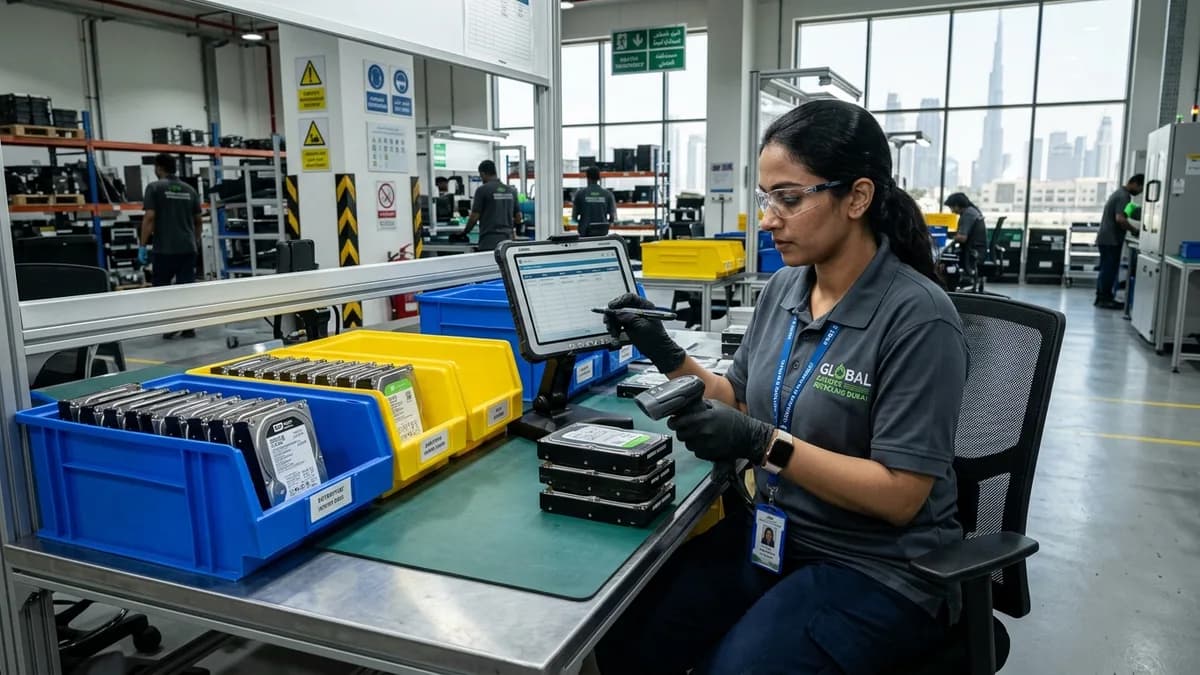
Personal data on paper still counts. UAE data protection rules apply to employee files, customer forms, copies of passports and Emirates IDs, and payroll printouts in a drawer just as they do to a database. Anything carrying that kind of information should go to a document-destruction company that shreds it and issues a certificate, the paper equivalent of the secure process used for hard drives and IT equipment.
Pull every drawer all the way out
Folders slip over the back of the hanging rails and fall into the cavity behind or below the bottom drawer. Remove each drawer completely, or at least shine a torch into the back, before the cabinet is signed off as empty. That is where forgotten contracts and staff files usually turn up.
Locked cabinets and lost keys
Most steel filing cabinets have a single lock barrel at the top that secures every drawer at once. If the key is gone, check with facilities first: office furniture keys are often kept on a master ring, and the key number stamped on the lock face can sometimes be used to order a replacement.
Failing that, a locksmith can open the cabinet or drill out the lock barrel in a few minutes. Avoid forcing the drawers with a bar or screwdriver. That bends the runners and the cabinet frame, which turns a resaleable cabinet into scrap and can leave a jammed drawer still full of documents.
Why filing cabinets are awkward to move
An empty four-drawer cabinet feels manageable until it is tilted. Most units have an anti-tilt interlock that lets only one drawer open at a time, because a cabinet with several loaded drawers pulled out can topple forward. Once the cabinet is on its back on a trolley, drawers can slide open unexpectedly unless they are removed or taped.
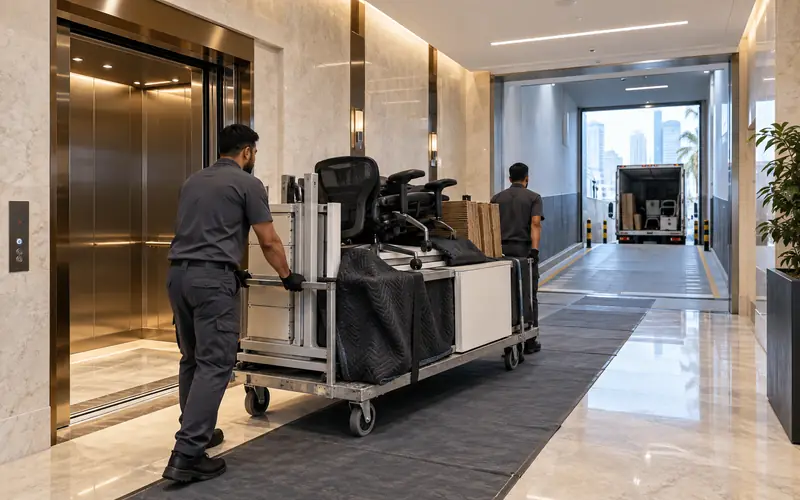
Most drawers lift out once they are fully extended, using small release levers on the runners. Taking them out reduces the weight and stops them sliding. Carry the shell upright on a hand truck with a strap round it, and keep the drawers in a separate stack. In a Dubai tower, that also means booking the service lift and loading bay, padding the lift walls, and often working after hours so the move does not block reception or shared corridors.
Fire-rated cabinets are a different class of weight. The insulated walls that protect the contents make them far heavier than a standard steel cabinet of the same size, often too heavy for two people on stairs. Mention them when you ask for a quote so the right team and equipment are sent.
Drawer units travel upright, strapped and padded on a trolley, with the service lift booked before the crew arrives.
Resell, donate or recycle: choosing the route
Condition decides the route. A straight, rust-free steel cabinet with smooth runners and a working lock (or a replacement key) is still useful office furniture. Second-hand office furniture traders, small businesses setting up and schools are the obvious takers, especially if you have several matching units.
Cabinets with bent frames, broken runners, rust or missing drawers are worth more as metal than as furniture. Steel is one of the easiest materials in an office clearance to recover, so these units should go to a scrap metal recycler rather than general waste. Expect the metal value to be modest; it rarely covers the cost of moving the units. Wooden or laminate filing cabinets follow the same route as other office furniture.
Filing cabinet types and what usually happens to them
Cabinet type
Handling note
Usual route
Vertical steel cabinet (2–4 drawers)
Remove or tape drawers; carry upright on a strapped hand truck
Resale or reuse if straight and lockable; otherwise steel recycling
Lateral filing cabinet
Wide and top-heavy; check it fits the lift door and car diagonally
Resale in matching sets; steel recycling if damaged
Mobile pedestal (under-desk)
Light enough for one person once empty; keys often missing
Reuse with the matching desk run, or steel recycling
Fire-rated or security cabinet
Very heavy; needs extra crew and equipment; never on stairs by hand
Specialist resale or metal recovery
Wooden or laminate cabinet
Prone to splitting at joints when tipped
Reuse if solid; otherwise furniture disposal and wood recovery
Cabinets as part of a full office clear-out
If the cabinets are leaving with desks, chairs and storage from a whole floor, plan them into the wider office clearance sequence rather than as an afterthought. Records cleared and certified first, then furniture out in one booked lift window, then the floor handed back.
Send a photo of the cabinets with their drawer count and tell us which floor and building they are on. We will quote a fixed price and tell you whether any unit needs extra hands.
Can Dubai Municipality's bulky waste pickup take office filing cabinets?
The free municipal bulky-waste pickup is aimed at residential households, not commercial premises. Businesses generally arrange their own licensed collection for office furniture. A single filing cabinet from a home office may qualify, but municipal crews will not carry items down from high-rise apartments, so check access before you book.
Will a removal crew take a filing cabinet that still has files in it?
It is better not to ask them to. Once a cabinet leaves your premises you lose control of what is inside it. Clear and check every drawer yourself, send confidential papers to a certified shredding company, and hand over an empty cabinet. Bagged shredded paper can then go for normal paper recycling.
Are old steel filing cabinets worth anything?
Matching sets of clean, lockable cabinets can sell to second-hand office furniture buyers, although rarely for much. Damaged cabinets have scrap metal value that varies with the market and usually only offsets part of the cost of removal. Their real value is that steel is fully recyclable and stays out of landfill.
Planning a clearance in Dubai?
Send photos of what you need cleared on WhatsApp. Our team provides an instant, fixed upfront rate and handles elevator bookings and gate security smoothly.
Specialists in residential and commercial clearances across Dubai since 2016. Committed to safe property handovers, compliant electronic waste disposal, and municipal green waste diversion.
 Ask a Question